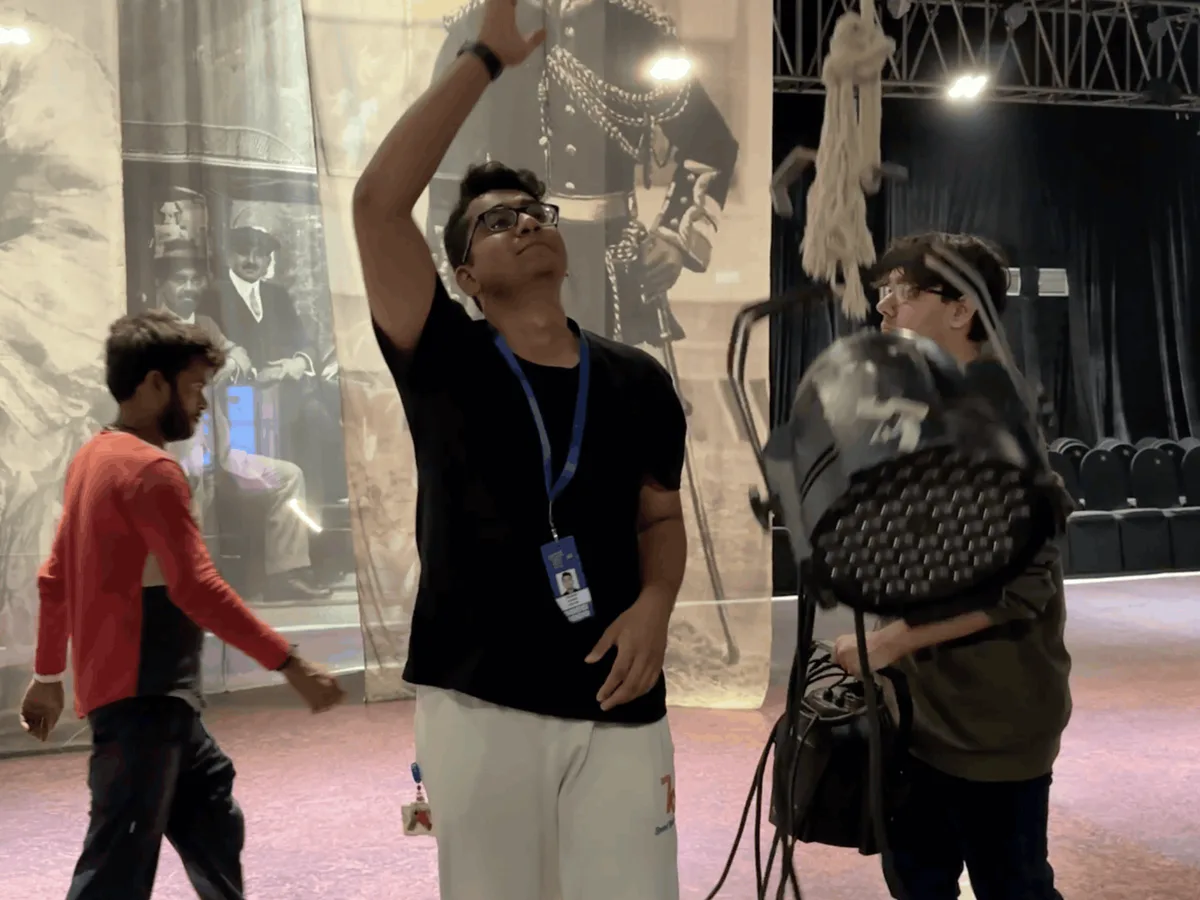
The best stage lighting courses in Mumbai give you real console hours, mentors who still light live shows, a small batch and a portfolio you can put in front of an employer. Everything else is packaging, and this guide shows you how to check each of those four things before you pay a rupee.
If you are comparing courses right now, you are probably asking one question: will this actually get me hired? It is a fair fear. Plenty of students have already paid for a course that taught theory, handed over a certificate and left them no closer to a lighting desk. Every brochure says “hands-on”. The questions in this guide show you whether it really is.
IIED COURSE
MA in Lighting Design
Want console hours, rigging, light plots and a live showcase in one place? This is IIED’s full-depth route.
Duration: 2 Years (4 Semesters), full time · Mode: Classroom, in Mumbai
A quick note on where we stand. We run lighting training at IIED in Malad East, so yes, we have a stake in this. But treat this as a buyer’s checklist, not a sales pitch. Use it on every institute you visit, including ours. And if a short weekend workshop is the right pick for you, we will say so plainly.
Table of Contents
Four Kinds of Stage Lighting Courses in Mumbai (and Who Each One Suits)
Not every course is trying to do the same job. Before you compare fees or brochures, work out which kind of course you are actually looking at. A two-day workshop and a two-year programme are not competitors. They solve different problems for different people.
| Type of course | Typical length | Who it suits |
|---|---|---|
| Weekend workshops | One to three days | The curious, theatre volunteers, and event managers who want enough vocabulary to brief a lighting vendor |
| Short console courses | Around one month | Technicians, operators or crew who already work around lights and need one specific, paid skill |
| Long programmes | One to two years | Freshers and career switchers who need the whole picture, not one tool |
| Online courses and YouTube | Self-paced | Theory and console logic, as a supplement to real training |
1. Weekend workshops (one to three days)
A workshop gives you a taste. You learn the names of fixtures, see how a DMX signal travels from desk to light, and maybe get a few minutes on a console. That is useful if you are curious, if you volunteer for a theatre group, or if you are an event manager who wants enough vocabulary to brief a lighting vendor properly.
What a workshop cannot do is make you job-ready. Console speed comes from repetition, and repetition takes weeks, not hours. If a workshop promises a lighting job at the end, be careful.
2. Short console courses (around one month)
These focus on one console and on programming it properly. They suit people who already work around lights, such as technicians, operators or crew, and who need one specific, paid skill. Our GrandMA3 Mastery Program sits here: one month, 74 hours in total (24 hours of live training plus 50 hours of self-paced practice), taught offline in Malad. The fee is ₹75,000 + 18% GST.
Be honest with yourself about eligibility. A console course like this is built for people with roughly one to two years of experience. There is a selection process with an entrance test and an interview. If you have never coiled a cable or rigged a fixture, a console course will feel like learning to drive on a highway.
3. Long programmes
Long programmes cover the full foundation: the science of light and colour, electrical power, rigging safety, fixtures, DMX networks, light plots, console programming, design, and real show experience. They suit freshers and career switchers who need the whole picture, not one tool. IIED’s two-year MA in Lighting Design falls in this group.
4. Online courses and YouTube
Online learning is good for theory and for console logic. You can download grandMA3 onPC software from MA Lighting and start learning the command line on your laptop. That is a smart first step.
But you cannot learn rigging, focusing, cabling or the feel of a physical desk under show pressure through a screen. Use online material as a supplement to real training, not a replacement for it.
You will also meet a few other types of training while you shop around. Some event management courses cover lighting for a week or two. Some institutes sell sound and lighting as one combined course, where lighting gets half the hours. Some sell a certificate with very little practice behind it. Certificates do matter to some employers and to many parents, and that is a fair concern. But in a hiring conversation, what gets you through the door is what you can do on a console and who can vouch for your work.
The 6-Point Checklist for Comparing Stage Lighting Courses in Mumbai
Here is the checklist in one table. Print it, take it on every visit, and fill it in for each institute.
| Check | What good looks like | Red flag |
|---|---|---|
| 1. Console hours and consoles | Personal hands-on hours on real grandMA3 and Avolites Titan desks, plus practice time outside class | One desk shared by a large class, or software demos only |
| 2. Who teaches | Mentors who still light live shows and can name their recent work | Trainers who left live work years ago, or faculty you never meet |
| 3. Batch size | A small batch and a clear answer on students per console | A vague answer, or “it depends” |
| 4. Light plots and CAD | You draw real light plots in CAD or Vectorworks Spotlight | The course stops at “types of lights” and console buttons |
| 5. Portfolio | You leave with plots, patch sheets, cue lists and show footage | You leave with a certificate and nothing else |
| 6. Outcomes | Named alumni, real companies, real roles you can check | “100% placement” with no names attached |
Check 1: Real console hours, and which consoles
Ask a direct question: how many hours will I personally have my hands on a console? Not “the class has a console”. You. Programming is a muscle-memory skill. You build speed by patching, storing cues and fixing mistakes again and again.
Then ask which consoles. grandMA3 and Avolites Titan are two names worth asking about directly. If the answer is a basic DMX controller or a laptop demo, you are looking at an introduction, not training.
Check 2: Who teaches, and do they still work live shows?
Lighting moves fast. Fixtures change, console software updates, and the way shows are built keeps shifting. A mentor who still lights live events teaches you how the job works this year, not ten years ago. Ask what show your mentor lit recently. A working professional will answer quickly and happily.
Check 3: Batch size
Ask for a number. Then ask how many students share each console during practice. Small batches matter because a mentor can only watch so many hands at once. In a big class, the confident students get the desk and the quiet ones watch.
Check 4: Light plots and CAD drawing, not just fixture basics
A lighting designer’s job starts on paper. Before a single light is rigged, someone draws the plot: where every fixture hangs, what it does and how it is patched. Employers ask for plots. If a course never teaches you to draw one, it is training you to operate, not to design.
We have written separately about what a complete stage lighting course should teach, so we will not repeat that list here. Use it alongside this checklist.
Check 5: A portfolio you leave with
On your last day, what will you hold in your hands? A good lighting course leaves you with a light plot, a patch sheet, a cue list, and photos or video of a show you actually programmed. That is what you send to a rental house or production company. A certificate alone tells an employer that you attended. A portfolio shows them what you can do.
Check 6: Named, verifiable alumni outcomes
“100% placement” is easy to print and hard to check. Ask for three alumni names, the companies they work at and their roles. A good institute will share them without hesitation. Better still, ask whether you can see an alumni portfolio. Names and portfolios you can verify are worth more than any percentage on a banner.
Questions to Ask on a Campus Visit
Take this list with you. Ask every question at every institute and write the answers down. The differences become obvious very quickly.
- Can I see the console room? Which consoles do you have, and how many?
- How many hours will I personally spend programming?
- Can I practise on the consoles outside class time?
- Who is my mentor, and what have they lit recently?
- How many students are in a batch, and how many share each console?
- Will I draw light plots? In which software?
- What exactly will be in my portfolio on the last day?
- Will I work on a real show or an internship during the course?
- Can you give me three alumni names and tell me where they work now?
- What is the total fee, including GST, and what does it cover?
One more tip: if you can, sit in on a class. Watch how often students touch the desk and how often they watch the trainer. That ratio tells you more than any brochure.
Short Course or Longer Programme? Match It to Where You Are
The right stage lighting course in India depends on where you are starting from, not on which course sounds most impressive. Here is how we would advise four different students who walk into our office.
If you are a fresher with no lighting background
You need the foundation first: power, rigging safety, fixtures, DMX and plots. Then you need console time on top of that. A one-month console course assumes you already know the basics, so it is the wrong first step for you. Choose a longer, hands-on programme that builds you up from zero.
That is exactly what Ashish Gonamanda did. He was a fresher who discovered lighting design was a real career, got hooked, and joined our lighting design training. Today he works as a Lighting Operator / Designer at Show Genesis in Andheri East, Mumbai, at ₹40,000 a month. A complete beginner can get hired, if the training is real.
If you are already a technician, operator or crew member
You know cabling, fixtures and load-ins. Your gap is usually programming, design, or both. If your goal is to become a faster, better-paid programmer or operator, a focused console course may be all you need. If your goal is to move up from operator to designer, you need the design side too: plots, colour, design process and show building.
Ritesh Khichariya spent two to three years as a lighting operator in Raipur. He wanted to design bigger shows, so he moved to Mumbai to study lighting design properly. He now works as a Lighting Operator / Designer at Show Genesis, Andheri East, at ₹40,000 a month. Atharva Jog was also already working in lighting, but he lacked the technical foundation. After training at IIED, he joined SLS Production in Saudi Arabia as a Lighting Operator in August 2025, on SAR 10,000 a month plus accommodation and flights.
If you are an event management graduate
You know how events run. You probably do not yet know how the lights run. Many event management graduates hit a wall when they apply for technical roles, because their degree taught planning, not production. Learning stage lighting gives you a skill companies hire for directly.
Aditya Shrikrishna Tawde was a freelance event manager. He wanted to learn lighting properly under Lloyd Sir, so he joined IIED. He is now an Assistant Lighting Programmer at Fireflies Creative Technologies in Wadala, Mumbai, on ₹25,000 a month during a six-month probation, then ₹40,000 a month.
If you are just curious
Do a weekend workshop. Seriously. Spend two days around lights, see if the work excites you, and then decide. There is no shame in testing the water before you commit months and money. If you are weighing a short certificate against a longer degree route, read our guide to lighting design certificate vs MA in India first.
Why It Helps to Learn Stage Lighting in Mumbai
Where you study matters almost as much as what you study. Mumbai is one of India’s busiest live-event cities. Concerts, corporate launches, award nights, film and TV shoots and a long wedding season all run here, and the rental houses and production companies that light them are based here too.
That has a practical effect on your training. When you learn stage lighting in Mumbai, the shows you can shadow, the vendors you can meet and the companies that hire are all within reach of a local train. Two of our recent lighting alumni joined Show Genesis in Andheri East. Another joined Fireflies Creative Technologies in Wadala. Those jobs were a short commute from where they trained.
That is also why students like Ritesh move from smaller cities to train here. If you are comparing Mumbai with other cities, such as Bengaluru, ask the same six questions in both places, and then ask one more: how close will I be to real shows? We compared the options in more detail in our guide to the best city to learn lighting design in India.
How IIED Teaches Stage Lighting
Here is how we answer our own checklist. Hold us to it when you visit.
- Real consoles: you train on grandMA3 and Avolites Titan, the same desks you will meet on real shows.
- A working mentor: lighting is taught by Lloyd Albuquerque, a Light Director and professional lighting designer for 20 years. He set up LGL Designs in 2003 and lights fashion shows, concerts, theatre, award nights, corporate launches, and film and TV.
- Small batches: so you get real time on the desk and real feedback on your work.
- Plots, not just buttons: you draw CAD light plots and work in Capture and Vectorworks Spotlight, so you learn to design, not just operate.
- A portfolio: every student leaves with work they can show. You can see real alumni lighting portfolios on our website.
- One roof: IIED is the only institute in Mumbai that teaches Event Design, Lighting and Production together, so you learn how lighting fits into the whole show.
We offer two lighting routes. The GrandMA3 Mastery Program is a one-month lighting course with GrandMA3 training for people who already have some experience. The MA in Lighting Design is IIED’s own two-year, full-time, hands-on master’s programme. It takes you from the science of light through rigging, fixtures, DMX, plots and console programming, includes an industry internship in Semester 2, and ends with a show you design and run in front of a live public audience. For fees and details, see the MA in Lighting Design course page.
Real Outcomes: Where IIED Lighting Alumni Work Now
We said named outcomes matter, so here are ours. These come from real offer letters and alumni stories.
- Ritesh Khichariya: from lighting operator in Raipur to Lighting Operator / Designer at Show Genesis, Andheri East, Mumbai. ₹40,000/month.
- Ashish Gonamanda: from fresher to Lighting Operator / Designer at Show Genesis, Andheri East, Mumbai. ₹40,000/month.
- Aditya Shrikrishna Tawde: from freelance event manager to Assistant Lighting Programmer at Fireflies Creative Technologies, Wadala, Mumbai. ₹25,000/month in probation, then ₹40,000/month.
- Atharva Jog: from working in lighting without a technical foundation to Lighting Operator at SLS Production, Saudi Arabia. SAR 10,000/month plus accommodation and flights (August 2025).
Across our earlier lighting design batches, students with 0–1 years of experience recorded a highest CTC of ₹29.40 LPA, an average of ₹8.20 LPA and a median of ₹3.90 LPA. Notice the gap between the average and the median: a few high international offers pull the average up, and the median is the more typical number. These figures come from past alumni of our earlier lighting programme. They are not a promise, and they do not describe the new MA, which has not yet graduated a batch.
Want to see the work behind these jobs? You can view real alumni portfolios, including lighting portfolios from Ritesh and Aditya.
Frequently Asked Questions
Which is the best stage lighting course in Mumbai?
The best course is the one that fits where you are starting from and passes the six checks: personal console hours, working mentors, a small batch, light plot training, a real portfolio and named alumni outcomes. Visit at least two institutes and compare them on those points, not on brochures.
How long is a stage lighting course, and can I finish one in a month?
Workshops last one to three days, console courses about a month, and full programmes one to two years. You can learn a console in a month if you already have lighting experience. Building the full foundation from zero takes longer.
Do I need prior experience to join a stage lighting course?
Not for a foundation programme. IIED’s MA in Lighting Design starts from first principles and is open to graduates from any stream. Short console courses such as the GrandMA3 Mastery Program are designed for people with around one to two years of experience.
Which consoles should a stage lighting course teach?
Ask for real, hands-on time on professional desks such as grandMA3 and Avolites Titan. Free software like grandMA3 onPC is useful for practice, but you also need hours on a physical console.
Is an online stage lighting course enough to get a job?
Usually not on its own. Online learning is good for theory and console logic, but rigging, focusing, cabling and running a live show need hands-on training on real equipment.
What should I ask before enrolling in a lighting course?
Ask how many console hours you personally get, who teaches and what they lit recently, the batch size, whether you draw light plots, what your final portfolio contains, and for three alumni names with their current companies.
Can I visit IIED and see the consoles before I decide?
Yes. Book a free visit to our Malad East campus in Mumbai, see the console room, meet the team and ask every question on the checklist. Call 9892966334 to book.
What jobs can I get after a stage lighting course in Mumbai?
Common roles include lighting operator, lighting programmer, console operator, lighting technician and, with design training and experience, lighting designer. IIED alumni work at companies such as Show Genesis, Fireflies Creative Technologies and SLS Production.
Ready to Start Your Stage Lighting Career?
Every stage lighting course says it is hands-on. Now you know how to check. Count the console hours, meet the mentor, ask the batch size, look for light plots, ask what goes in your portfolio and ask for real names. Then pick the course that matches where you are today, whether that is a weekend workshop, a one-month console course or a full programme.
If you want to put IIED through the same test, come and see us. Sit at the consoles, meet the team, look at real alumni portfolios and ask us anything on this list.
Book your free visit — call 9892966334 or email info@weareiied.com. IIED, Shop No. 506, 5th Floor, Magic Square, Dwarkadhish Road, off Poddar Road, Malad East, Mumbai 400097.
IIED COURSE
GrandMA3 Mastery Program
Already around lights and want serious console hours? Spend a focused month programming on a real grandMA3.
Duration: 1 Month (74 hours: 24 hrs live training + 50 hrs self-paced practice) · Mode: In person, at IIED’s training centre in Malad, Mumbai