
Two software questions come up in every counselling call at IIED: “Do I need CAD or Vectorworks?” and “Can’t I just learn both eventually?” If you’re weighing CAD vs Vectorworks for event production, you’re not alone — and the honest answer depends on where you are right now, not on which software sounds more impressive on a resume.
Which software to learn for event production shouldn’t be a guessing game, and it isn’t one here. This guide breaks down what each course actually teaches, who each one is built for, and which one gets a specific type of student hired faster. No vague feature comparisons. Just real course facts — fees, hours, and career outcomes — from IIED’s Event Production vertical.
Table of Contents
CAD vs Vectorworks for Event Production: What Actually Sets Them Apart
CAD and Vectorworks solve different problems on a real production, even though both show up in the same job postings.
CAD — specifically AutoCAD, taught in IIED’s CAD for Events & Entertainment course — is the technical draftsman’s foundation. It teaches you to build precise 2D floor plans, seating charts, and stage elevations: the working drawings a venue, vendor, or production team actually uses on-site.
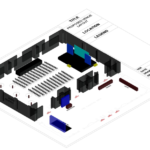
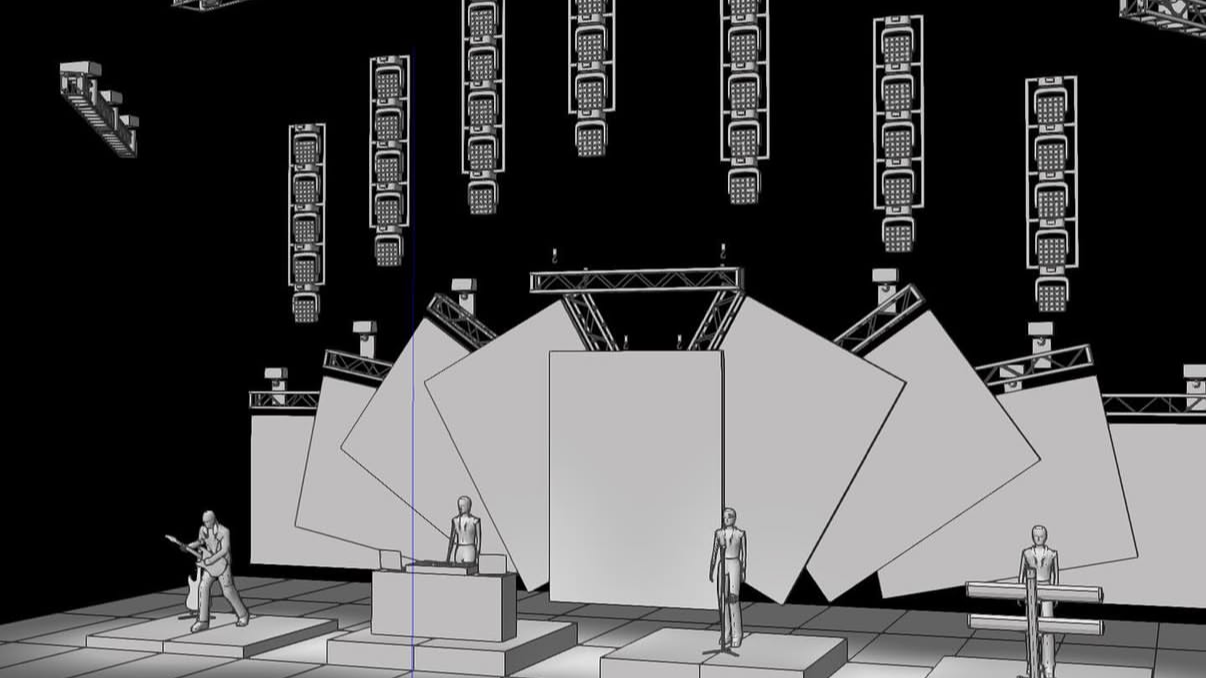
Vectorworks Spotlight is the industry-standard BIM (Building Information Modeling) tool for full event documentation. It goes beyond flat drawings into 3D venue modeling, rigging plans, truss layouts, and lighting device placement — the technical backbone of a full production package.
Put simply: CAD makes you fluent in the drawings most events still run on. Vectorworks makes you fluent in the 3D, data-rich documentation that bigger, more technical productions now expect. Neither replaces the other. They solve different-sized problems, and India’s event and exhibition market is growing fast enough that both skill sets stay in demand — the sector is expanding at roughly 8% a year, according to Mordor Intelligence.
This is also a question almost nobody answers honestly online. Most software comparison content is written for architects or interior designers, not for people building event careers in India. Search “CAD vs Vectorworks” and you mostly get generic feature lists lifted from the software vendors themselves — not a straight answer about which one gets a specific type of student hired in Mumbai, Pune, or Bengaluru. That gap is exactly why this guide exists.
It also matters which course you’re comparing these tools through. A generic online AutoCAD tutorial teaches drafting in the abstract — furniture layouts, architectural plans, mechanical parts. IIED’s CAD for Events & Entertainment course teaches the same software, but every drawing you produce is an event drawing: a wedding floor plan, a concert site map, a stage elevation. The software is identical. The application, and the portfolio you walk away with, is not.
What You Actually Learn in CAD for Events & Entertainment
IIED’s CAD for Events & Entertainment course runs 1 month — 36 hours total, combining live training with supervised practice — for ₹20,000 inclusive of taxes. Eligibility is 10+2, and admission runs through an application, entrance test, and interview.
The curriculum moves through three levels. Foundation covers AutoCAD interface navigation, drafting basic geometry, precision tools like snaps and layers, and plotting for venue handovers. Technical Proficiency adds reusable blocks (chairs, stage decks, lighting fixtures), project templates, and data extraction for production budgets. Professional Mastery covers 3D foundations, XRefs for linking external drawings, and industry safety standards.
By the end, you’ve produced real deliverables: wedding and corporate floor plans, seating charts, stage elevations, concert site maps, and a portfolio built from that work — not just practice files.
Who CAD Is Built For
CAD is the faster, cheaper entry point. It’s built for students who need one technical, sellable skill fast — especially event management graduates who finished a degree in coordination and logistics but never touched a drafting tool.
Arun Sagar is the clearest proof of what CAD alone can do. He completed CAD for Events & Entertainment and was placed in the Operations & Production department at NMACC (Nita Mukesh Ambani Cultural Centre) in BKC, Mumbai — one of India’s most prestigious venues. He didn’t need a second course to get in the door.
Varun Jain is a second data point. He’s an Event & Wedding Design Visualization graduate with CAD skills listed directly in his job description. He works as a Design Associate at The Finale Eventz in Mumbai, starting at ₹45,000/month during probation and confirmed at ₹50,000/month after.
What makes CAD a good first course specifically for event management graduates is what it doesn’t require. You don’t need a design degree, an art background, or years of sketching practice. You need 36 hours and the discipline to finish three structured levels. That’s a much lower barrier than most people assume when they hear “technical software course.”
What You Actually Learn in Vectorworks Spotlight for Event Production
IIED’s Vectorworks Spotlight for Event Production course also runs 1 month, but with more depth: 48 hours total, split into 24 hours of live training and 24 hours of self-paced practice. Getting in is more selective — a mandatory four-phase process covering application, entrance exam, interview, and final selection. Contact IIED directly for current fees.
The curriculum starts with interface navigation and importing base plans from PDF, DWG, and SketchUp files — so prior CAD exposure helps here. It moves into layers and classes, viewport management, and building out stage decks, seating sections, and soft goods. The advanced level is where Vectorworks earns its “industry standard” reputation: truss and mother grid rigging, bridles, lighting device placement, audio/video equipment layout, and data worksheets for reports and inventory.
Every graduate leaves with professional stage technical drawings — complete with title blocks, drawing labels, and dimensions — the exact documentation format production companies expect.
The Internship Vectorworks Adds That CAD Doesn’t
The single biggest difference on paper: Vectorworks Spotlight for Event Production comes with a 100% 3-month internship on completion. That’s a structured, defined next step — not a certificate you have to convert into a job on your own. If you’re choosing based on which course hands you a clearer path after graduation, this is the deciding fact.
Who should join: aspiring event designers who want professional-grade layouts, lighting/audio/video technicians and producers, set and stage designers who need precise 3D modeling, and production managers who want to own complete venue documentation — not just parts of it.
What a Vectorworks-Trained Designer Actually Delivers on Site
On a real production — a wedding mandap, a corporate stage, a concert rig — a Vectorworks-trained designer isn’t just handing over a pretty render. They’re delivering a rigging plan a truss vendor can quote against, a lighting plot a technical director can program from, and a worksheet a production manager can use to track inventory. That’s the difference between a decorative 3D image and technical documentation a crew can actually build from.
CAD or Vectorworks for Event Design: Which Should You Learn First?
If you have zero technical or software background and want the fastest, most affordable way to become useful on a real production, start with CAD. At 36 hours and ₹20,000, it’s a low-risk first step that produces a working portfolio in a month — and Aron Sagar’s NMACC placement shows it can stand on its own.
If you already have some CAD or drafting fluency, or you know you want to specialise toward lighting, rigging, or full technical production documentation, go straight to Vectorworks. The DWG-import step in its curriculum means CAD-literate students move faster through the early modules, and the included 3-month internship gives you a defined landing spot after the course ends.
If budget or time only allows one course right now and you’re genuinely unsure, CAD is the safer starting point. It’s shorter, cheaper, and the skills transfer directly — Vectorworks’ own curriculum assumes you can already read and import a technical drawing.
Can you eventually learn both? Yes — many working technical production professionals do, over time, as their roles demand it. But specialise in one first. Splitting your first month of study between two software packages means you finish neither one job-ready.
This decision matters most for one specific group: event management graduates who trained in coordination and logistics but never learned to design or draft. Kshiti Jain and Lishika Jain are both event management graduates who could not get design work with management training alone. Both later started their own event design companies — but only after building a technical skill at IIED first. Management theory doesn’t get you hired to design an event. A technical skill does.
A Simple Way to Decide Without Overthinking It
If you’re still stuck, answer three questions honestly. One: do you already know any drafting software, even basic AutoCAD from school or a past job? If yes, go Vectorworks. Two: is ₹20,000 and one month a comfortable first step, or do you need to prove this career path to yourself (or your parents) before spending more? If you need proof first, go CAD. Three: do you specifically want to work in lighting, rigging, or technical production rather than general event design? If yes, Vectorworks is the more direct route, internship included.
Fees, Duration and ROI: CAD vs Vectorworks Side by Side
| CAD for Events & Entertainment | Vectorworks Spotlight for Event Production | |
|---|---|---|
| Duration | 1 month | 1 month |
| Hours | 36 hours | 48 hours (24 live + 24 self-paced) |
| Fees | ₹20,000, inclusive of taxes | Contact IIED for current fees |
| Admission process | Application, entrance test, interview | Mandatory 4-phase selection: application, entrance exam, interview, final selection |
| Standout benefit | Fast, affordable technical foundation | 100% 3-month internship on completion |
Neither course is a guess when it comes to outcomes. Arun Sagar went from CAD for Events & Entertainment straight into Operations & Production at NMACC. Varun Jain’s CAD skills are named in his job description at The Finale Eventz, where his salary climbed from ₹45,000 to ₹50,000/month within his probation period. Vectorworks graduates get a built-in 3-month internship, turning a completed course into supervised, real production experience before they even apply for their first job.
Whichever you learn first, you’re building a skill that a plain event management degree does not teach — and that’s exactly the gap AutoCAD vs Vectorworks event design career decisions in India are meant to close.
It’s worth being honest about what these numbers don’t tell you too. ₹20,000 and one month won’t turn anyone into a senior designer overnight, and Vectorworks’ four-phase selection process exists because the course assumes a level of commitment, not because IIED wants to make it artificially exclusive. Both courses are a starting point, not a finish line. What they do reliably provide is a specific, demonstrable skill that a recruiter can verify in a portfolio review — which is a very different thing from a general degree that only shows you attended classes.
Which One Gets You Hired First?
If you’re an event management graduate with no design or drafting skill, start with CAD for Events & Entertainment. It’s the fastest, cheapest way to walk out with a real, sellable skill and a portfolio — the same path Arun Sagar took to NMACC. If you’re ready to go deeper, or you want a built-in internship on the other side, Vectorworks Spotlight for Event Production is the next step up.
Neither path is a trap. Students who start with CAD and later add Vectorworks aren’t starting over — the DWG-import step in the Vectorworks curriculum exists precisely because so many students arrive already knowing basic drafting. The two courses were built to stack, not to compete with each other for your attention.
Want to go deeper on either skill before deciding? Read our full breakdowns of CAD for Event Design and Vectorworks for Event Design in India for a closer look at each course on its own.
Still not sure which one fits where you are right now? Book your free visit at IIED’s Malad East campus. Bring your questions — we’ll walk through your background and help you decide between CAD and Vectorworks in one honest conversation, not a sales pitch.