
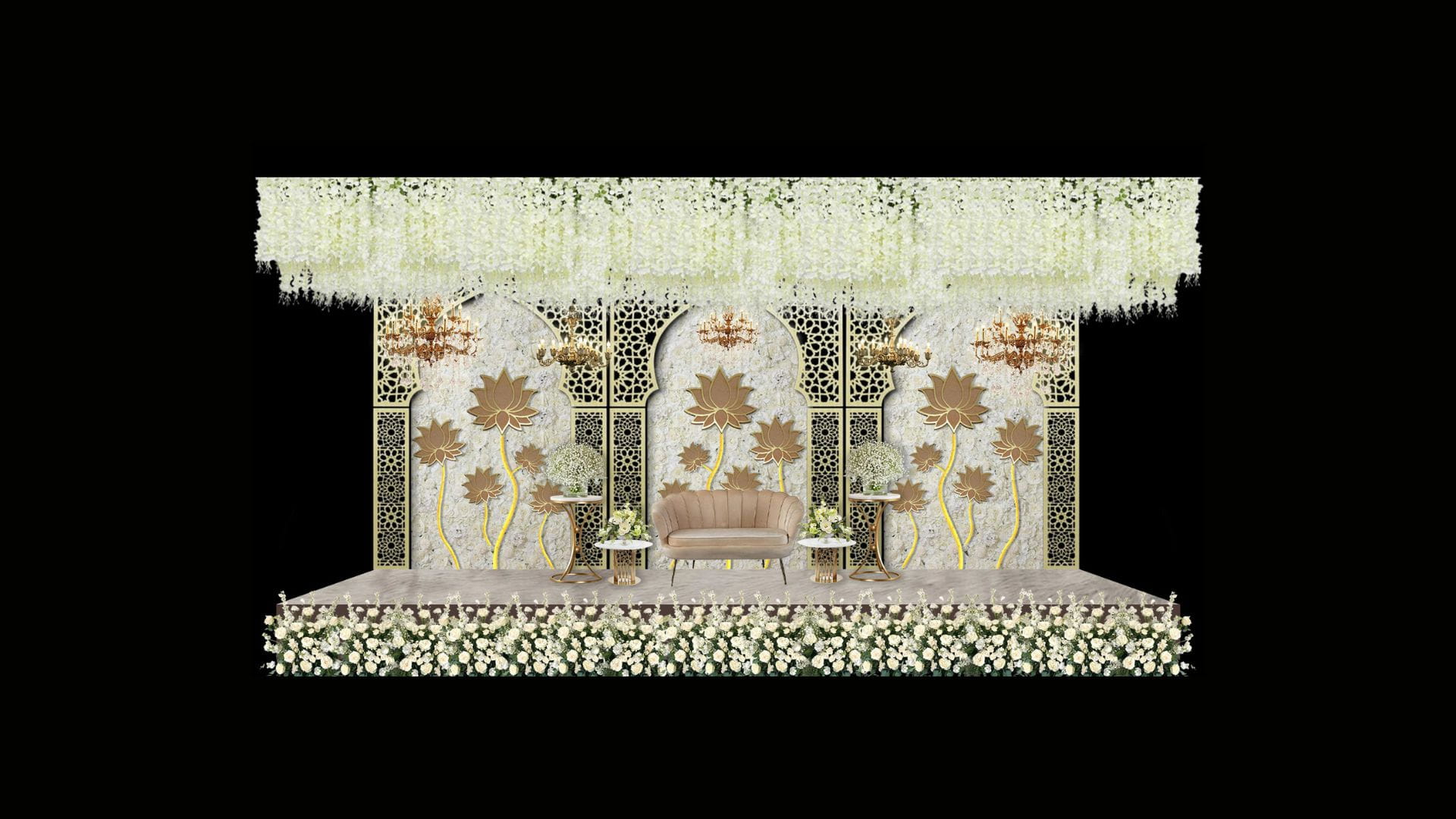
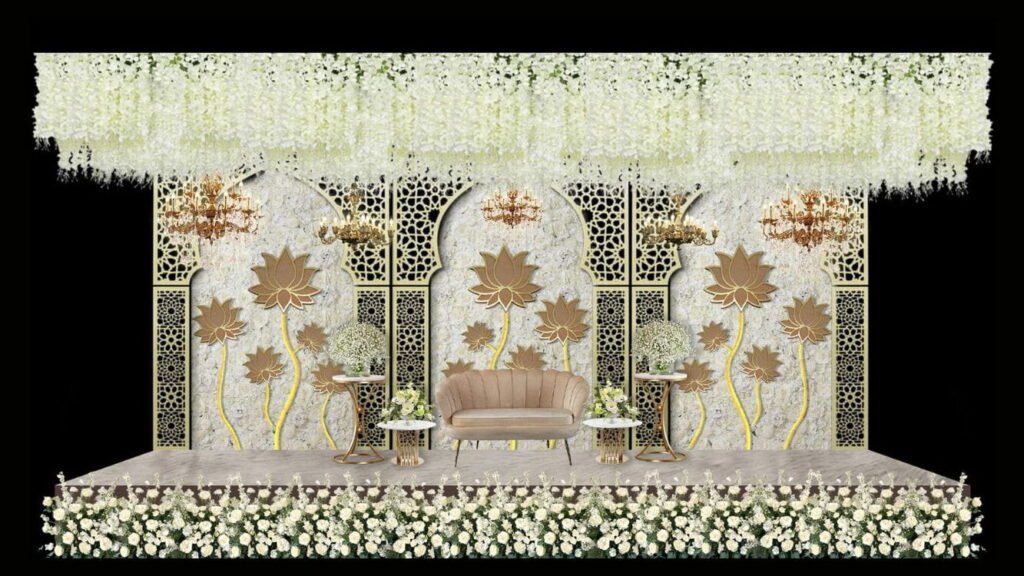
If you’ve searched for a floral styling workshop as part of a wedding design course in India, you’ve probably already asked yourself the same quiet question every serious applicant asks: will they actually teach me to do this, or will I just watch someone else do it on a screen? It’s a fair doubt. Most “design courses” show you finished tablescapes on a slide and call it training. IIED doesn’t work that way. Inside the Event & Wedding Design Visualization course, floral styling is a graded, hands-on practical — real flowers, real materials, a real mentor standing next to you while you work. This post walks through exactly what that session looks like, where it sits in the curriculum, and why it matters whether you’re already styling your cousin’s wedding on weekends or you’ve never touched a stem of jasmine in your life.
Table of Contents
What IIED’s Floral Styling Workshop Actually Looks Like
Picture a small batch of students standing around a worktable covered in fresh flowers, wire, floral tape, foam, and greenery — not a projector screen. That’s the floral styling workshop at IIED. Students work in small batches by design, because floral styling is a hand skill. You can’t learn how much pressure to use when wiring a rose stem, or how a garland actually drapes under its own weight, by watching someone else do it once at the front of a room.
A typical session starts with a short brief, the same way a client would give one: a colour palette, a theme, a space to fill — a mandap corner, a stage backdrop, a welcome table. Then the materials come out. Students build the piece themselves, with a mentor moving table to table, correcting grip, proportion, and technique in real time. By the end of the session, everyone has something physical in front of them: an arrangement, a garland, a styled corner they built with their own hands, not a mood board they pasted together in Canva.
This is deliberate. IIED’s own visual identity rule is “real students, real spaces, real equipment — not stock imagery,” and the floral styling practical is where that rule shows up most clearly. You leave the session able to style a real tablescape or a mandap corner, not just sketch one.
Where Floral Styling Sits Inside the Wedding Design Course Practicals
Floral styling isn’t a bonus add-on bolted onto the Event & Wedding Design Visualization course — it’s a listed, graded practical inside the curriculum. The course is structured across four units, and floral design and table styling sit inside Unit 2, Production of Event Design, alongside trussing, lighting and sound basics, fabrics and furnishing, and vendor management and budgeting. The course structure explicitly names the practical “floral design and sketching,” which tells you exactly how seriously it’s treated: as a technical skill you’re assessed on, not a creative filler session between the “real” units.
Why This Placement Matters for Wedding Design Course Practicals
Sitting floral styling inside Unit 2 means it’s taught alongside the other physical, on-the-ground skills a wedding designer actually needs on-site — not in isolation as a standalone “flower arranging” class. You learn floral styling the same way you’ll use it on a real job: as one part of a bigger production, next to the trussing crew, the lighting team, and the vendor you’re coordinating with. That’s the difference between a course that teaches wedding design course practicals as a connected system, and one that teaches disconnected hobby skills.
The course also includes masterclasses led by working industry professionals, not academic instructors reading off a syllabus. That means the person guiding your floral styling session has actually built this for a paying client before — the mentorship matches IIED’s broader differentiator of real industry mentors, not just academics.
Why the Eye You Already Have Is a Professional Skill, Not a Hobby
If you’ve spent years styling your own family’s events, helping cousins with their mandaps, or simply noticing when a table setting is “off” before anyone else does — you already have something most people don’t: an eye. The doubt that usually stops people at this stage isn’t talent. It’s whether that eye counts as a real, technical, hireable skill, or whether it’s “just” a hobby that happens to look nice in photos.
Sabari Kishor’s story answers that directly. He came to IIED already running his family’s decoration business in Tamil Nadu, with plenty of natural taste but no formal, technical training behind it. He took the Event & Wedding Design Visualization course online specifically to add professional visualisation and design skills on top of what he already had — and used what he learned to modernise the family business with a sharper, more professional edge. His eye didn’t change. What changed was the technical layer underneath it: the ability to plan, visualise, and execute a floral or decor concept the way a trained designer does, not just the way a talented amateur does.
That’s exactly what a floral styling workshop is built to do for a student in this position. It doesn’t replace your taste. It gives your taste a technical foundation — proportion, structure, material behaviour, colour theory applied to real flowers instead of Pinterest boards — so that what used to be “you have a good eye” becomes “you are a trained, professional floral and wedding designer.”
Who This Floral Styling Workshop Is Actually For
Two very different people usually land on this page. The first has been quietly styling events for years — for family, for friends, sometimes for a small fee — and wants proof that this can become an actual career, not just a side hustle people compliment at weddings. The second has just finished school or college, is genuinely interested in wedding design, but is skeptical that any course will really be hands-on rather than another set of theory-heavy slideshows.
Both are welcome, and neither needs prior floral or decor experience walking in. If you’re in the first group, the floral styling workshop gives your existing taste a technical, credible foundation — the kind that gets you taken seriously by vendors, clients, and employers, not just family members. If you’re in the second group, this is the practical that answers your skepticism directly: real flowers, real materials, real mentor feedback, in a small batch where you’re actually building something with your hands every session, not sitting through slides about what floral design theoretically involves.
What You Need Before You Start
You don’t need to already know how to wire a stem or build a garland. You need curiosity, a willingness to work with your hands, and enough interest in weddings and events to sit through a full production-focused curriculum — trussing, lighting basics, vendor management, and presentation methods, not floral styling alone. The floral styling practical is one part of a full designer’s toolkit, not a standalone flower-arranging class.
What You Actually Get From Floral Design Training for Wedding Designers
The floral styling workshop sits inside IIED’s Short Term Event Design Course, offered on-campus in Mumbai as the Event & Wedding Design Visualization programme. It runs part-time over three to four months, with total fees of ₹60,000, split across an enrolment payment and two instalments — structured so it fits around a job, college, or a family business, the way it did for Nirali Reshamiya and Sabari Kishor. Assessment is by digital portfolio and presentations, not a single written exam, which matters for a hand skill like floral design: your grade reflects what you can actually build, not what you can describe on paper.
By the end of the course, floral design training for wedding designers at IIED leaves you with three concrete things: a technique you’ve practiced with your own hands on real materials, a portfolio piece you built yourself that you can show a client or an employer, and direct feedback from a mentor who does this professionally — not a grade with no explanation behind it. That combination is what separates a credential from an actual, demonstrable skill.
What a Floral Styling Practical Can’t Give You (And What Can)
It’s worth being honest about what a single practical session, or even a full course, can and can’t do. No workshop can substitute for the hours of real-world repetition you’ll put in once you’re actually working weddings — that part only comes with time on the job. What a structured floral styling practical inside a full wedding design course can do is compress the learning curve: instead of guessing your way through your first ten real events, making expensive mistakes with a client’s flowers and budget, you make those mistakes in a training session, with a mentor correcting you before it costs you a client.
That’s also the honest difference between this and simply watching floral styling tutorials online. A video can show you a finished garland. It can’t tell you, in the moment, that your wire gauge is wrong for the stem weight, or that your colour blocking will look muddy under warm event lighting instead of daylight. A mentor standing at your table, working with the same real materials, can. That’s the entire case for a practical, in-person (or supervised) workshop over self-taught content — not that self-teaching has no value, but that it can’t replace direct, real-time correction on real materials.
Why Floral Styling for Event Design Is in More Demand Than Ever
India’s wedding industry is currently valued at roughly ₹3.75 lakh crore and still growing, and floral styling is one of the most visible, most photographed, and most budget-scrutinised parts of any wedding a client hires a designer for. Globally, the events industry generates close to $1.2 trillion in market activity, with employment in the sector projected to grow around 8% through 2030 — faster than the average across all occupations. None of that growth happens without people who can actually execute the floral and decor concepts clients are paying for, not just design them on a screen.
That gap between “can visualise it” and “can actually build it” is exactly where floral styling for event design earns its place in a designer’s toolkit. A wedding designer who can sketch a mandap concept but has never physically built a floral installation is missing a skill that clients, vendors, and employers notice fast — usually on-site, under time pressure, when there’s no one else around to do it. A designer who has done the practical work themselves can step in, direct a florist’s team with real technical language, or execute the piece personally if needed. That’s a hireable difference, not a cosmetic one.
From Floral Styling Practical to Paid Wedding Design Work
The real test of any practical isn’t how it feels in the room — it’s whether it leads to paid work afterward. IIED’s placement record for the Event & Wedding Design Visualization course backs this up with named alumni, not vague claims.
Nirali Reshamiya studied the course in the evening, part-time, two hours a day, while continuing to work with a wedding decorator in Gujarat. She didn’t have to choose between an income and an education. After completing the course — including the same hands-on practicals this workshop is part of — she moved into a significantly higher position at Gurleen M Puri, a wedding design company. That’s a direct line from structured, practical training to career advancement, without putting her existing job on hold.
Then there’s Pranay Mhatre, the strongest single proof point for this course overall. After completing the Event & Wedding Design Visualization course, he was placed as a Production Designer at WIZCRAFT International — India’s oldest and largest event company. His placement isn’t floral-specific, but it’s the clearest evidence that this course, and the practicals inside it, lead to real jobs at real, well-known companies — not just a certificate and a portfolio with nowhere to take it.
A Mentor-Led Skill, Not a Self-Taught One
Both of these outcomes trace back to the same structure: masterclasses and practicals led by people who work in the industry, not people who only teach about it. The Event & Wedding Design Visualization course is guided by IIED’s Event Design mentor, Sushant Waidande, an industry practitioner rather than an academic instructor — and that’s the same mentor-led model behind the floral styling workshop itself. A working professional guides your hands through the same techniques they use on paying jobs, in small enough batches that you’re not competing for attention with thirty other students.
Wedding design isn’t a static skill either. According to The Knot’s research into wedding flower costs, floral design remains one of the largest and most closely scrutinised line items in a wedding budget — which means clients expect the person styling their flowers to know what they’re doing technically, not just aesthetically. That’s exactly the gap a graded, mentor-led practical is built to close.
See It for Yourself
Reading about a floral styling workshop and sitting in on one are two different things. If you want to see real students working with real flowers, under a real mentor, inside the same Event & Wedding Design Visualization course that led Nirali Reshamiya and Pranay Mhatre to real jobs — come watch it happen. Book your free visit and sit in on a live floral styling session at IIED’s Mumbai campus.