
Table of Contents
But What Do You Actually DO in Class?
Every student asks the same question before they enroll, even if they never say it out loud: what do event design course practicals in India actually involve? Is it another semester of PowerPoint slides and case studies, or do you actually build something with your hands?
It is a fair question. Most students who land at IIED have already sat through some version of event management theory — timelines, vendor coordination, budgeting spreadsheets — and it did not teach them how to design a space. If you have felt that gap, this post is the walkthrough you have been looking for: exactly what happens, unit by unit, inside the Event & Wedding Design Visualization course, and why the practicals are the real product, not the certificate at the end.
No sales pitch here. Just the room, the work, and what you leave with.
Inside the Course: Unit by Unit
The Event & Wedding Design Visualization course is built around five stages, and each one exists to get you closer to producing work a real client — or employer — would actually pay for. Here is what happens at each stage.
1. Design Foundation
You start with the fundamentals every working designer uses daily: colour theory, composition, proportion, and how to translate a mood or theme into a visual concept. This is where sketching practicals begin — not decorative sketching, but functional sketching you will use to pitch and plan real events.
2. Production of Event Design
This is the technical core of the course. You get hands-on with the building blocks of a live event: structural layouts, basic trussing and rigging concepts, lighting and sound fundamentals as they relate to design (not operation), and table and space styling. You are not reading about production — you are working through how a floor plan actually becomes a built environment.
3. Presentation Methods
A brilliant concept means nothing if you cannot present it. This unit covers graphic and production design presentation — the boards, layouts, and visual storytelling formats that working designers use to sell an idea to a client or a company before a single flower is ordered.
4. Final Design Project
A self-directed brief that simulates a real professional commission. More on this below — it is the single most important practical in the course.
5. Portfolio Development
Everything you have built across the earlier units gets refined into a professional portfolio — the actual document that gets you hired, not the certificate.
This structure is deliberate. It mirrors what hands-on event design training should look like anywhere in the world: foundation, technical production, presentation, a real project, and proof of your work. If you are researching what does an event design course actually teach, this sequence is the honest answer — not a list of software names, but a build-up of real, usable skill.
Each unit also builds directly into the next one, which is easy to miss from the outside. The sketching skills from Design Foundation get used again inside Production of Event Design, when you translate a concept into a working layout. The layouts you produce there become the raw material for Presentation Methods, when you learn to package that work into boards a client would actually approve. By the time you reach the Final Design Project, you are not learning a new skill in isolation — you are combining everything you have already practiced into one finished piece of work.
The Floral Design and Sketching Practicals
Two components get named specifically in the curriculum because they are where most students realize they can actually do this: floral design practicals and sketching practicals.
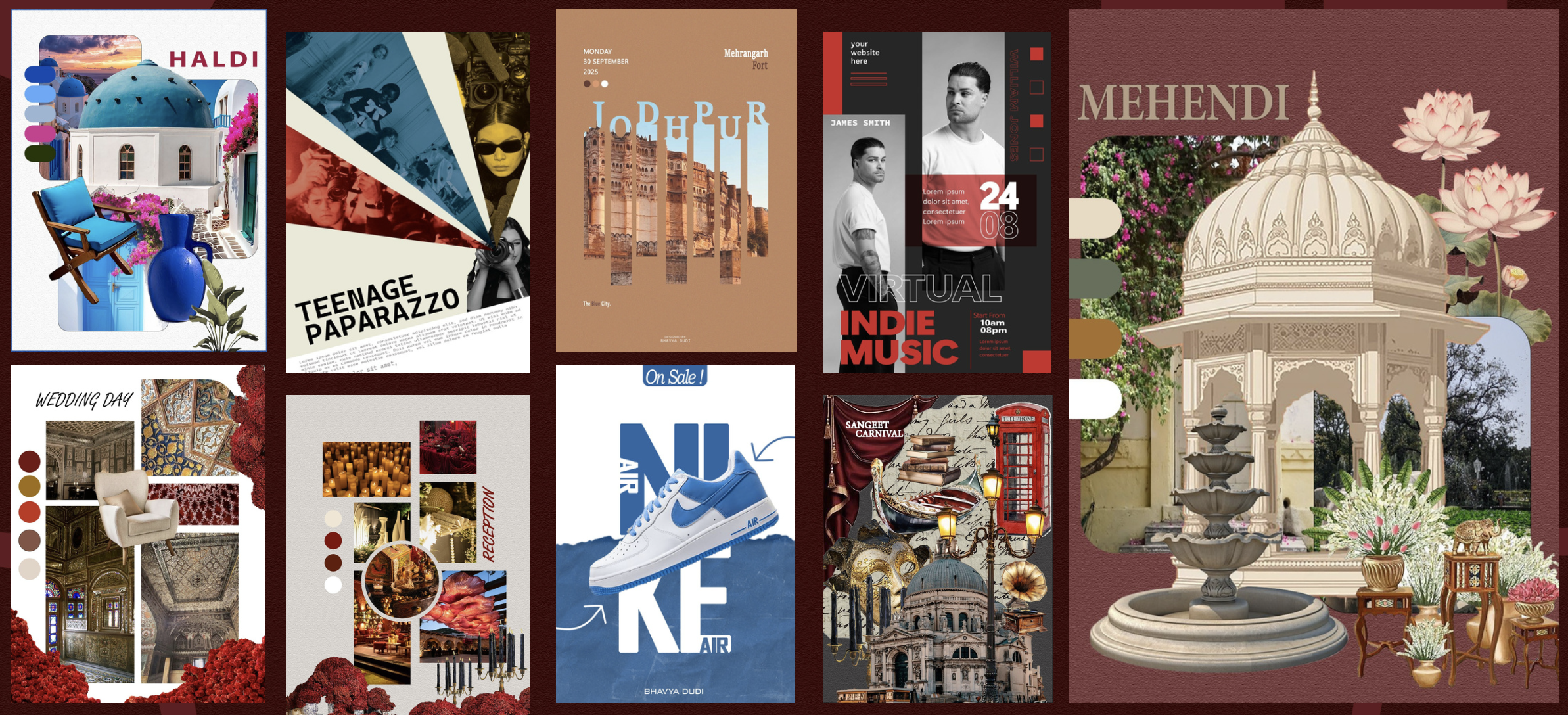
Floral design sessions are hands-on — working with real material, real arrangements, and real styling decisions, not just looking at reference photography. You learn how floral choices support a design concept instead of decorating it as an afterthought, which is a distinction most event management courses skip entirely.
Sketching practicals run in parallel. These are not fine-art sketching classes. You are trained to sketch fast, functional concepts that communicate an idea to a client or a production team in minutes, the same way working designers pitch ideas before a full 3D render exists. It is a skill you use in your first week on any real design job.
Together, these two practicals are usually the moment a student stops asking “is this course really hands-on?” and starts building a portfolio they are proud of.
The Final Design Project: Your Real Test
There is no written exam at the end of this course. Instead, you complete a Final Design Project — a self-directed brief built to simulate an actual professional commission, from concept through to a full visual presentation.
This is the practical that separates an event design masterclass from a lecture series. You are given a brief the way a client would give one: with constraints, a theme, and an outcome to hit. You then run the entire process yourself — concept, sketching, production planning, presentation boards — the same sequence you will use on a real job.
Employers do not hire based on your marks in a written theory paper. They hire based on what you can show them. The Final Design Project exists so that, by the time you graduate, you already have a portfolio piece built to the standard a hiring manager expects to see.
Who Teaches the Masterclasses
The masterclasses inside this course are taught by working industry mentors, not academics reading from a syllabus written a decade ago. That distinction matters more than it sounds. An academic can teach you design theory. A mentor who is still working on live events can tell you what a client actually asks for under pressure, what a production house looks for in a junior designer’s portfolio, and where the real entry points into this industry are right now.
This is one of the things that makes IIED different from a generic design school: every masterclass is taught by someone with real, current, hands-on experience in event design, lighting, or production — the same industry you are trying to enter.
It also means the feedback you get on your practical work is not generic. A mentor who is currently working a live event circuit can tell you, specifically, whether your Final Design Project presentation board would survive a real client meeting, or whether your floral styling concept is production-ready or still a nice idea on paper. That kind of direct, working feedback is difficult to get anywhere else, and it is a large part of why students describe the masterclasses as the sessions that changed how they think about design, not just what they know about it.
Small batch sizes make this possible. A room of thirty students cannot get individual feedback on a Final Design Project. A small, focused batch can — and that is by design, not a limitation.
What You Actually Walk Away With
A certificate is not the outcome. A professional digital portfolio is. By the end of the course, you have a body of real work — floral styling concepts, production layouts, presentation boards, and a completed Final Design Project — built and refined specifically to show employers, not just to file away.
This is the difference students consistently point to when they talk about why this training worked for them: they did not leave with a piece of paper that says they attended. They left with proof of what they can build.
That portfolio does real work after the course ends, too. It is what you send with a job application instead of a resume that only lists a course title. It is what you show a potential client if you decide to freelance. And because every piece in it — the sketches, the production layouts, the Final Design Project — was built to simulate an actual professional brief, it reads as work, not coursework, to anyone reviewing it.
Real Students, Real Placements
The clearest way to answer “does this training actually lead to work?” is to look at where recent graduates of the Event & Wedding Design Visualization course ended up.
Pranay Mhatre completed the course and was hired as a Production Designer at Wizcraft International Entertainment — India’s oldest and largest event company. It remains IIED’s strongest single placement story for this course, and it started with the same practicals covered in this post.
Shreya Pais entered the course as a fresh graduate with zero prior design experience. By the time she finished, the portfolio built through the course’s practical work — including her Final Design Project — was strong enough to get her hired immediately.
Nirali Reshamiya took the course part-time, in the evenings, for just two hours a day, while continuing to work. That schedule was enough for her to move up to Wedding Visualization Designer at Gurleen M Puri, directly on the strength of the coursework she completed.
Varun Jain completed the course offline and was hired as a Design Associate at The Finale Eventz in Mumbai, starting at ₹45,000 per month on probation and moving to ₹50,000 per month once confirmed.
None of these are theoretical outcomes. They are what happened after students completed the exact practicals described above — floral and sketching work, production units, presentation methods, and a Final Design Project built to a professional standard.
They also reflect how different the entry points can be. Pranay went straight into one of India’s largest event companies. Nirali kept her job and studied at night. Varun relocated cities to complete the offline course. There is no single “right” background for this — the practicals are built to take you from wherever you are starting to a portfolio an employer will actually look at twice.
Who This Is Actually For
If you are a college student exploring event design but unsure whether a course is real training or theory dressed up as a course, this is the honest answer: the practicals are the course. There is no separate “real” version happening somewhere else.
If you already have an event management degree and have sat through enough vendor-coordination theory to last a lifetime, this course is built for the gap you are feeling. Event design and event management are related but genuinely different skill sets — the real difference between the two, and which one actually gets you hired, is worth understanding before you choose your next step.
And if you are weighing how long this actually takes before you can work, it is worth reading about what it looks like to go from job-ready event designer in four months, and what the course costs, covered honestly in our breakdown of event design course fees in India.
How This Compares to a Theory-Only Course
A lot of event management programs cover vendor coordination, budgeting, and logistics — genuinely useful skills, but not design skills. You can finish that kind of course knowing how to run an event and still have no idea how to design one, which is exactly the gap students like Kshiti Jain and Lishika Jain described before they found practical design training. The test is simple: does the course produce a portfolio, or does it produce a certificate? If the answer is a certificate, the practicals were probably theory in disguise.
IIED’s approach is also one of the few in Mumbai that trains event design, lighting, and production together, on the professional equipment working studios actually use — AutoCAD, Vectorworks, and industry-standard production tools — rather than treating each as a separate, disconnected subject.
This is also an industry with real momentum behind it. According to the U.S. Bureau of Labor Statistics, employment for meeting, convention, and event planners is projected to grow faster than the average for all occupations through the current decade — a trend echoed in India’s own wedding and events industry, which continues to expand year over year. Practical, verifiable training is what lets you actually capture that growth instead of watching it happen around you.
See It for Yourself
Reading about the practicals only answers so much. The fastest way to know if this is real, hands-on training is to sit in a room while it is happening.
Book your free visit and sit in on a live practical session at IIED.