
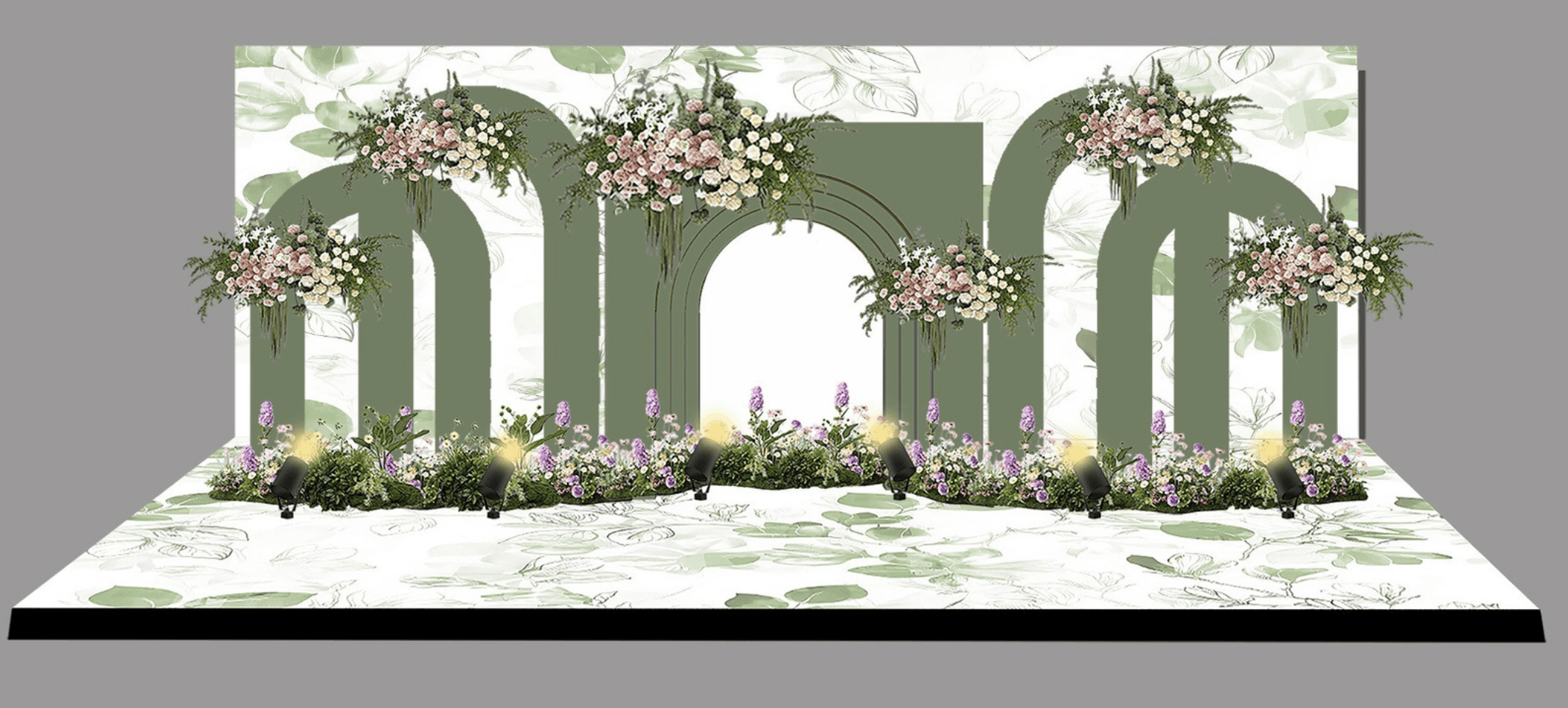
A set designer career in India is not one job. It is four career doors: weddings, live events, film and web series, and television. Each door hires differently, pays differently and expects a different first step.
Most students only ever see the film door, so they think the field is closed to them. It isn’t.
This guide walks you through all four doors, the skills every one of them needs, how the career ladder actually works, and how to start with zero experience. We will also show you where real IIED alumni landed, with real figures from their offer letters.
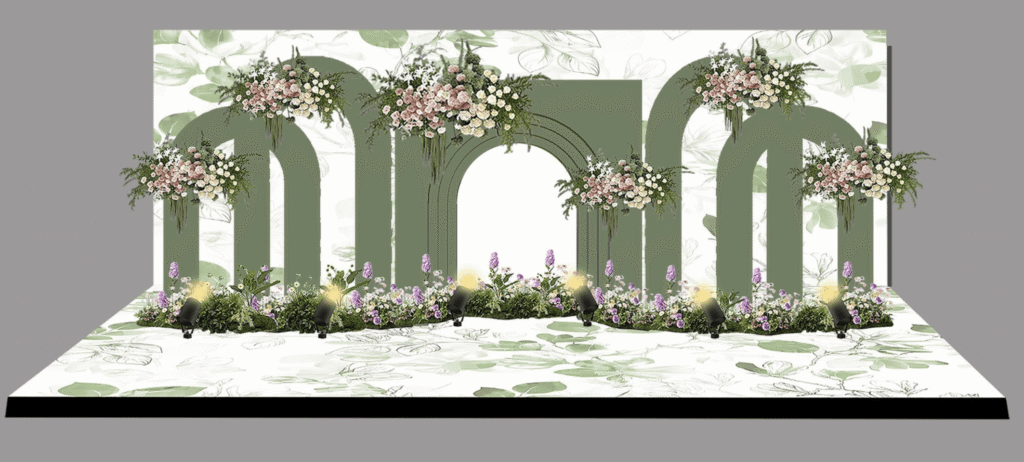
Table of Contents
The Short Answer: What a Set Designer Career in India Looks Like
Set designers in India work across four sectors: weddings, live events and award shows, film and web series, and TV. The work is the same at its core. You read a brief, imagine a space, draw it, and help build it on time and on budget. The route in is what changes from sector to sector.
In weddings, you can start as a design assistant or visualiser within months. In live events, you often enter through a production or design team at an agency. In film and TV, you usually start as an assistant in the art department and work your way up over several projects.
If you want the day-to-day picture first, read our guide on what a set designer does day to day. This post focuses on something else: where the jobs are, and how you get through each door.
The Four Doors of a Set Design Career Path in India
| Door | Who hires | Entry role |
|---|---|---|
| 1. Weddings | Wedding design studios, wedding planners with in-house design teams, décor companies and event companies that run large weddings | Design assistant, junior visualiser or design associate |
| 2. Live events and award shows | Event agencies, experiential and brand-activation companies, and production houses that build stages | Junior designer, visualiser or production design assistant |
| 3. Film and web series | Production designers and art directors, who build art department teams for each film or series | Art department assistant or assistant set designer |
| 4. TV and shows | TV production houses, channel in-house teams and set construction companies that supply them | Assistant set designer or art assistant |
Door 1: Weddings
Typical work: mandap design, stage and backdrop design, entrance and walkway concepts, themed décor for sangeet, haldi and reception nights, and 3D visualisations that the couple signs off on before anything is built.
Who hires: wedding design studios, wedding planners with in-house design teams, décor companies and event companies that run large weddings.
Entry role: design assistant, junior visualiser or design associate. This is the fastest door to walk through. Wedding companies need people who can turn a mood board into a clear 3D view the client can say yes to, and they hire for that skill directly.
Indian weddings are big, visual and repeat every season. That steady demand is why so many set designers start here. If this door interests you most, our post on mandap and stage design careers goes deeper.
Door 2: Live events and award shows
Typical work: stage sets for concerts, award nights, product launches, corporate conferences and brand activations. Think large LED-led stages, scenic flats, truss structures and branded environments that have to look right on camera and in the room.
Who hires: event agencies, experiential and brand-activation companies, and production houses that build stages.
Entry role: junior designer, visualiser or production design assistant. Event teams move fast. Here, your drawings have to be buildable, safe and on budget, because a fabrication team will start cutting from them within days.
Door 3: Film and web series
Typical work: designing sets that tell a story. A middle-class kitchen, a 1970s police station, a palace corridor. Every set has to match the script, the period and the director’s vision, and it has to work for the camera and the lights.
Who hires: production designers and art directors, who build art department teams for each film or series.
Entry role: art department assistant or assistant set designer. This door is slower. Work comes project by project, and your network matters as much as your portfolio. The upside is that a strong body of screen work opens bigger projects over time.
Door 4: TV and shows
Typical work: sets for reality shows, game shows, talk shows, news studios and daily soaps. TV sets often have to last for months, survive daily shoots and change quickly between episodes or seasons.
Who hires: TV production houses, channel in-house teams and set construction companies that supply them.
Entry role: assistant set designer or art assistant. TV can offer steadier work than film, because a single show may run for a long time. It rewards people who are organised, quick on revisions and comfortable with tight schedules.
A note on the doors: they are not sealed rooms. Many designers start in weddings, move into live events, and later take on screen work. The skills carry over. What changes is the pace, the client and the scale.
The Skills Every Door Needs
Whichever door you choose, set designer jobs in weddings, events, film and TV all test the same core skills. Here is what you need to build.
1. Sketching and perspective
You need to get an idea out of your head and onto paper quickly. A rough perspective sketch in a client meeting can win a project before any software opens. You don’t need to be a fine artist. You need to be clear.
2. Colour and composition
Why does one stage feel grand and another feel cluttered? Composition, scale and colour. Good set designers know how to lead the eye, frame a couple or a performer, and balance a space so it reads well in person and in photos.
3. Model-making
Physical models still matter, especially in film and theatre-style work. Building a scale model teaches you how a space really works: sightlines, heights, entrances and how people will move through it.
4. CAD and visualisation tools
This is where most hiring decisions happen today. Employers want to see clean drawings and convincing 3D views. We cover the full list in our post on the software set designers use.
5. Reading a brief
A brief tells you the budget, the venue, the audience and the feeling the client wants. Many beginners skip straight to “making it pretty”. Professionals read the brief twice and ask questions first.
6. Working to budget and safety on site
In any set designer career, a set that can’t be built for the money, or isn’t safe to stand on, is not a good design. Learn basic materials, structural sense and site safety early. Production teams trust designers who think about the build, not just the render.
A word on AI: AI tools are changing how fast you can produce concept images. They do not replace knowing scale, materials, budget or safety. AI changes the tools, not the need for real skill.
The Set Designer Career Ladder in India
Here is how most people climb in a set designer career in India. Be aware that job titles vary a lot by sector, and the same role can carry three different names in three companies.
Step 1: Assistant or intern
You support a senior designer. You redraw layouts, prepare mood boards, build quick 3D views, visit sites and learn how a design becomes a build. This stage teaches you more than any classroom can, as long as you arrive with the basics already in hand.
Step 2: Set designer or visualiser
You own parts of a project, then whole projects. In weddings and events, this is often called visualiser, design associate or junior designer. In film and TV, it may be assistant art director or set designer.
Step 3: Production designer or art director
You lead the look of a whole event, show or film. You manage a team, work with fabrication, lights and production, and answer to the client or director. Our post on set design vs production design explains how these two roles differ.
Step 4: Own studio or freelance
Many experienced designers go independent. Some run small studios that design for several wedding or event companies. Others freelance on film and TV projects. This step comes after years of work and a strong reputation, not straight after training.
The honest picture on pay: salaries depend on city, employer, sector and experience. For IIED’s Wedding, Event & Set Design programme, alumni placements show an average CTC of ₹4.68 LPA and a median of ₹4.80 LPA, based on students with 0–1 years of experience. Pay rises as you climb the ladder, but the first rung is where everyone starts.
How to Become a Set Designer in India With Zero Experience
You don’t need contacts in Bollywood to start. You need proof that you can do the work. Here is a practical three-step starter plan.
Step 1: Build a portfolio first
Your portfolio is your entry ticket to every door of a set designer career. Aim for five to eight strong projects. Include a mandap or wedding stage, a corporate or award-show stage, and one story-led set, such as a room from a film script you like. For each, show the brief, sketches, a floor plan and a final 3D view.
Step 2: Get real exposure early
Assist on weddings in your family or neighbourhood. Volunteer for your campus fest décor team. Ask local décor companies if you can shadow a setup day. Every site visit teaches you how designs meet reality: power points, ceiling heights, load-in time and budget cuts.
Step 3: Learn drawings and visualisation properly
This is the skill that gets you hired and moves your set designer career forward. Employers want people who can produce clean layouts and convincing 3D views without hand-holding. A structured, hands-on course shortens this learning curve from years to months.
For event management graduates (Profile 5): you already know how events run. What you’re missing is the design and visualisation side. That gap is very fixable, and several of our alumni came from exactly this place.
For interior designers and architects (Profile 3): you already understand space, scale and drawings. Set design asks you to work faster, think temporary, and design for a camera or an audience. Your skills transfer well.
For working professionals: you don’t have to quit your job to switch. Some of our alumni studied part-time in the evenings and moved up inside the companies they were already working for.
Do You Need a Degree or a Set Design Course?
Here is the balanced answer. You don’t strictly need a degree to become a set designer in India. Many working set designers learned on the job. But that route is slow, unpaid for long stretches, and depends heavily on luck and contacts.
A structured, hands-on course gives you the drawing, visualisation and portfolio skills employers check for, in a fraction of the time. It also puts you around working industry mentors who know who is hiring.
Wedding, Event & Set Design at IIED
Our Wedding, Event & Set Design course trains you in event and wedding design visualisation: concept, drawings and 3D views, built around a real portfolio. It is the course behind the alumni outcomes you will read about below. It suits you if you want to enter through the weddings or live events door and start working sooner.
The MA in Set Design: a 2-year, full-time route
If you want deeper training that covers every door, including film and TV, IIED is launching the MA in Set Design. It is IIED’s own 2-year, full-time, hands-on master’s degree programme, open to graduates in any discipline. It runs in small batches and includes a supervised industry internship.
Semester 2 includes CAD, Graphic Visualisation and Generative AI, with training in AutoCAD, Photoshop and Illustrator. Students then pick an elective: Set Design for Film & Television, or Theming & World-Building for Weddings & Events. That choice maps straight onto the four doors in this guide.
The wider programme also covers design fundamentals, the history and theory of set and production design, sketching, perspective and model-making, storyboarding and rendering, set construction and materials, safety and rigging awareness, and props and set dressing. For full details, see the MA in Set Design course page.
Why IIED for a set design course in Mumbai: we are the only institute in Mumbai that teaches Event Design, Lighting and Production under one roof. You learn from working industry mentors, and you build a portfolio in every course. That matters because sets don’t exist alone. They are lit, built and run by production teams, and you will work better if you understand all three.
Real IIED Outcomes
Here is where real alumni of our Wedding, Event & Set Design programme (the alumni course is called Event & Wedding Design Visualization) are working now. Each one maps to a door or a rung from this guide.
| Alumni | Door / route | Role and company | Pay on file |
|---|---|---|---|
| Pranay Mhatre | Live events | Production Designer, WIZCRAFT | — |
| Varun Jain | Weddings | Design Associate, The Finale Eventz | ₹45,000/month on probation, ₹50,000/month confirmed |
| Nirali Reshamiya | Working professional, part-time | Wedding Visualization Designer, Gurleen M Puri | — |
| Manisha Mahto | Event management graduate | Junior Graphic Designer, Inextis Events | ₹30,000/month gross |
| Saanchi Rajwani | Early starter | Paid Event Design Intern, Robust Events | ₹30,000/month stipend |
The live events door: Pranay Mhatre, Production Designer at WIZCRAFT
Pranay completed Event & Wedding Design Visualization and was placed at WIZCRAFT, India’s oldest and #1 event company, as a Production Designer. That is rung three of the ladder, at one of the biggest names in live events.
The weddings door: Varun Jain, Design Associate at The Finale Eventz
Varun was already working in Jodhpur’s wedding industry. He moved to Mumbai to level up, trained at IIED, and joined The Finale Eventz as a Design Associate. His pay: ₹45,000 a month during probation, and ₹50,000 a month once confirmed.
The working professional: Nirali Reshamiya, Wedding Visualization Designer at Gurleen M Puri
Nirali didn’t quit her job to study. She took the part-time route, two hours a day, while working. She was promoted from assistant to Wedding Visualization Designer at Gurleen M Puri.
The event management graduate: Manisha Mahto, Junior Graphic Designer at Inextis Events
Manisha finished an event management course, then moved from Ranchi to Mumbai to learn design. She joined Inextis Events as a Junior Graphic Designer at ₹30,000 a month gross. It is a clear first rung, and a direct switch from management into design.
The early starter: Saanchi Rajwani, paid Event Design Intern at Robust Events
Saanchi landed a paid Event Design internship at Robust Events, with a ₹30,000 monthly stipend, while she was still in her second year of graduation. She didn’t wait to finish her degree to start building her career.
These stories don’t promise that everyone gets the same result. They show what is possible when real skills meet a strong portfolio.
Who This Career Is For (and Who It Isn’t For)
A set designer career in India suits you if you:
- Notice spaces. You walk into a wedding or a show and think about how it was put together.
- Enjoy drawing, building or arranging things, even as a hobby.
- Like a mix of creative work and practical problem-solving.
- Are comfortable with deadlines, site days and the occasional late night before an event.
- Want a career where your work is seen by hundreds or thousands of people.
It may not suit you if you want a fixed nine-to-five desk job with no site work, or if you dislike changing a design when the budget or client changes. Revisions are part of the job.
If you’re a recent graduate who feels lost: that is normal. Many of our students joined with no clear plan and found their direction once they started designing real briefs. You don’t need to have it all figured out on day one. You need a first step.
How the four doors compare to other creative careers: set design sits between interior design, graphic design and production. It is more hands-on than graphic design, faster-moving than interior design, and more creative than pure production work. The industry around it keeps growing too. The India Brand Equity Foundation’s media and entertainment overview tracks how India’s screen and live-entertainment sectors are developing.
Frequently Asked Questions
What does a set designer do in India?
A set designer plans and draws the physical space for a wedding, event, film or TV show. They read the brief, sketch concepts, create floor plans and 3D views, and work with fabrication teams to build the set on time and on budget. The core work is the same across sectors; the pace and client change.
Can you become a set designer for weddings and events without a film background?
Yes. Weddings and live events are often the easiest doors to enter, and they don’t need any film background. Employers look for clean drawings, convincing 3D views and a strong portfolio. Many set designers start in weddings or events and move into film or TV later.
Which pays more in India: wedding, event, film or TV set design?
Pay varies by city, employer and experience, so there is no single answer. IIED’s verified figures for its Wedding, Event & Set Design programme show an average CTC of ₹4.68 LPA and a median of ₹4.80 LPA at 0–1 years of experience. Alumnus Varun Jain earns ₹50,000 a month as a confirmed Design Associate.
Do you need a degree to become a set designer in India?
Not strictly. Many set designers learned on the job. But a structured, hands-on course or degree programme speeds things up, because it teaches the drawing, visualisation and portfolio skills employers check for. It also connects you with working industry mentors who know who is hiring.
How do I build a set design portfolio as a beginner?
Start with five to eight projects that cover different doors: a mandap or wedding stage, an event stage and one story-led set from a script. For each, show the brief, sketches, a floor plan and a final 3D view. Add real work from family weddings or campus fests if you can.
What is the difference between a set designer and a production designer?
A set designer designs specific sets or spaces. A production designer leads the overall look of an entire event, show or film and manages the team that delivers it. Most production designers start as set designers or visualisers and move up the ladder with experience.
Is set design a good career in India in 2026?
Yes, for people who enjoy creative, hands-on work. Weddings, live events, film and TV all need set designers, so you have more than one door in. Pay starts modestly and rises with experience. IIED alumni have been placed at companies including WIZCRAFT, The Finale Eventz and Gurleen M Puri.
Ready to Start Your Set Design Career?
You’ve seen the four doors, the skills and the ladder. The fastest way to know which door fits you is to see real student work and talk to people who teach this every day. Come to our Malad East campus in Mumbai, look through student portfolios, and ask us anything about your set designer career in India.
Book your free visit — call 9892966334 or email info@weareiied.com. IIED, Shop No. 506, 5th Floor, Magic Square, Dwarkadhish Road, off Poddar Road, Malad East, Mumbai 400097.