CAD for Event Design: The Technical Skill Your Event Management Course Never Taught You
Category: Event Design
Date: July 2026
Author: Team IIED
CAD for event design is the one skill event management courses never cover — and it’s the exact skill event companies ask for when they’re hiring. If you’ve finished a BBA, a diploma, or any event management program, you already know how to coordinate a wedding or a corporate show. What you probably can’t do is hand someone a floor plan, a stage elevation, or a seating chart on request. That gap is why so many event management graduates apply for design jobs and hear nothing back.
Table of Contents
Event Management Teaches You To Plan. It Doesn’t Teach You To Draw.
Most event management courses cover the same ground: logistics, vendor coordination, budgeting, timelines. Useful skills. But none of them teach you to produce the technical drawings event companies actually work from.
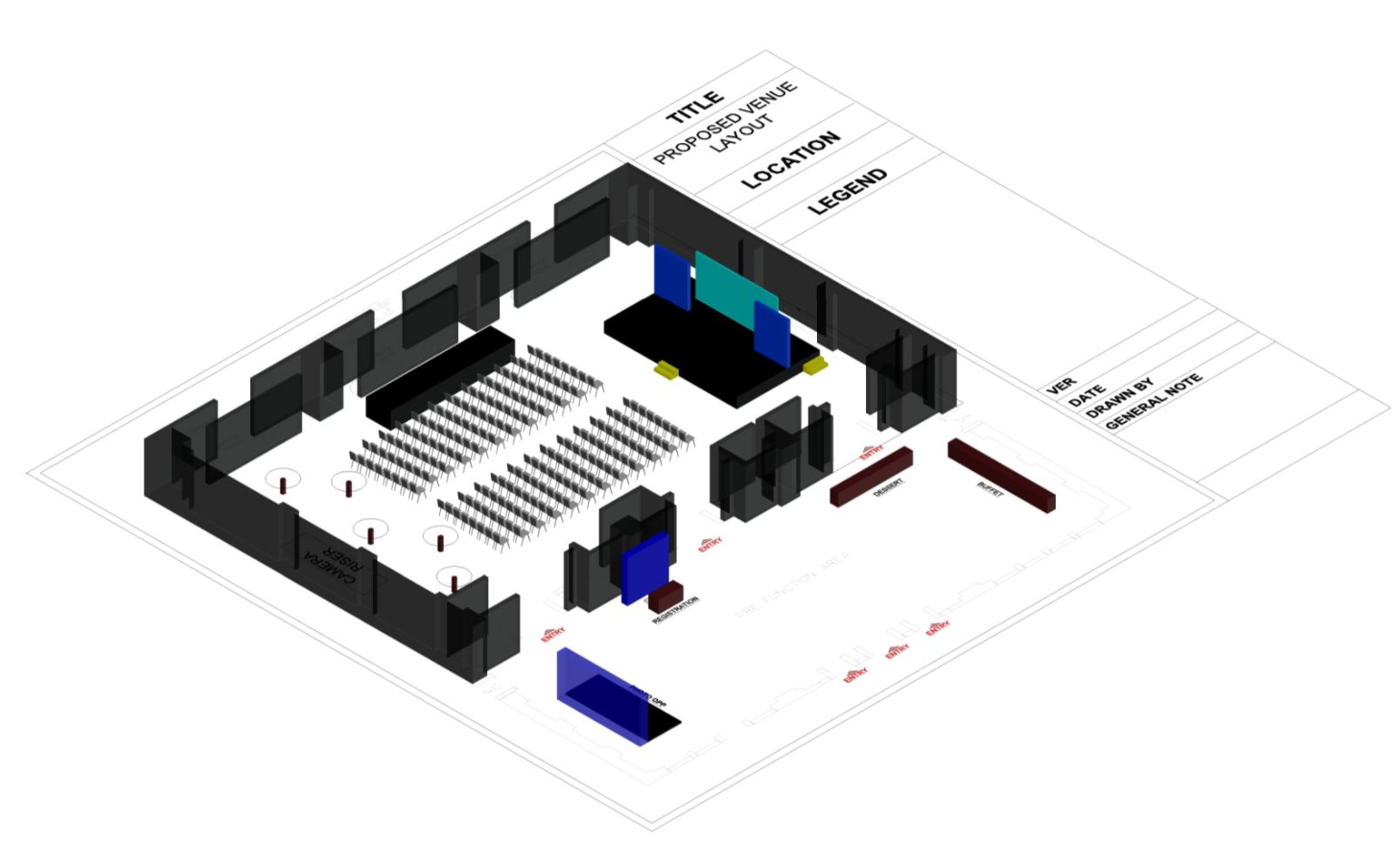
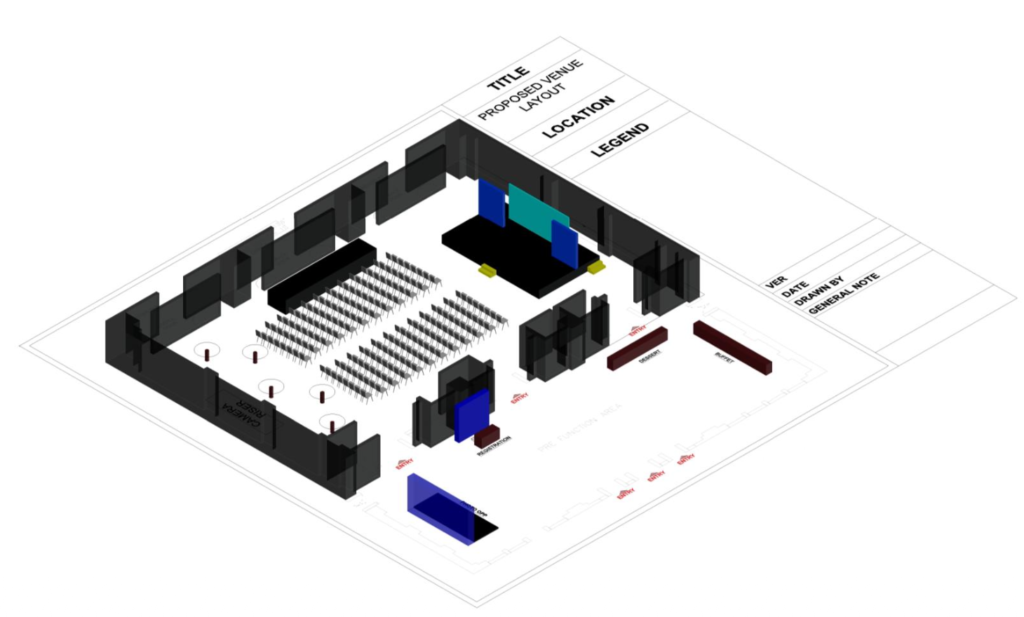
A floor plan. A stage elevation. A seating chart with real dimensions. These are the deliverables a production house, a wedding company, or a venue asks a designer to hand over — not a mood board, not a Pinterest link.
If your course never put you in front of AutoCAD or Vectorworks, you finished with the ability to plan an event but not the ability to draw one. That’s the difference between coordinating someone else’s design and being the person who designs it.
What CAD Actually Does For An Event Designer
CAD software turns an idea into a working drawing. Instead of describing a stage layout in a meeting, you show it — to scale, with exact measurements, ready for a vendor or a rigging team to build from.
That matters because event companies don’t hire people to imagine events. They hire people to specify them: how wide the stage is, where the seating rows sit, how much clearance a truss needs, where the power runs. CAD is the tool that lets you hand over that specification instead of talking around it.
It’s also a fast skill to add. You don’t need an engineering background — CAD training built for the events industry is designed for people coming from a creative or event management route, not a technical one. What it demands is precision: getting the measurements right, understanding scale, and learning to produce a drawing that someone else can build from without asking you to explain it.
His placement is proof that a focused, technical short course can be enough on its own. You don’t need a second degree. You need the specific skill the job is asking for.
The same pattern shows up across IIED’s other graduates. Varun Jain moved from Jodhpur’s wedding industry to Mumbai, trained in technical drawing and production at IIED, and was placed as a Design Associate at The Finale Eventz — ₹45,000/month on probation, rising to ₹50,000/month confirmed. “I made the move to Mumbai and joined IIED’s offline training to master the technicalities,” he says. “It directly led to an incredible opportunity at The Finale Eventz.”
Does A CAD Technical Skill Actually Pay More?
For event management graduates specifically, the pattern is direct. Kshiti Jain graduated in event management and struggled to break into the wedding industry. “After passing out of event management, I found myself struggling to break into the wedding industry,” she says. IIED gave her the design foundation to start her own event design company.
Lishika Jain, also an event management graduate, took the same route — she completed the design training and co-founded her own event design company with two partners.
Manisha Mahto, an event management graduate from Ahmedabad, moved to Mumbai after training at IIED and was placed as a Junior Graphic Designer at Inextis Events at ₹30,000/month gross — a concrete entry-level number for a design-track role, not a planning or coordination one.
None of these students lacked event knowledge. They lacked the technical output that gets a design job offered instead of a coordination one. CAD, technical sketching, and production drawing are what close that gap.
How Long Does It Take, And What Does It Cost?
IIED’s CAD for Events & Entertainment course runs 1 month — 36 hours of hands-on training — for ₹20,000, all-inclusive. It’s built as a fast, low-cost add-on skill for someone who already holds an event management degree or diploma, not another multi-year commitment.
The course covers three levels, from foundational drafting through to 3D modelling, so you leave with a portfolio-ready set of drawings, not just software familiarity. That’s what a company checks for — not whether you’ve used AutoCAD, but whether you can hand over a floor plan a vendor can build from without redoing it.
Why Choose an Event Design Course in India: Unlocking a Creative Career with Professional Training The events industry in India is one of the fastest-growing creative sectors, spanning weddings, corporate launches, music festivals, award nights, exhibitions, and immersive brand experiences. Behind every stunning décor setup, captivating stage design, or atmospheric lighting arrangement is the meticulous […]
Ever wondered how to become an event decorator and turn your love for creativity into a rewarding career? In India, where every wedding, festival, and corporate event demands stunning decor, the path to become event decorator is both exciting and accessible. This guide will walk you through the steps to launch your career, from building […]
Lighting is one of the most important aspects of any visual presentation, event, or performance. But what does a lighting designer do? Lighting designers are the masterminds behind the magic of lighting, whether it’s a theatre performance, a corporate event, or an architectural installation. Their role is to craft lighting that enhances the experience, making […]
Related
What is CAD used for in event design?
+
-
CAD is used to produce the technical drawings an event actually runs on — floor plans, stage elevations, seating charts, and layouts drawn to scale with exact measurements. Vendors, rigging teams, and venues work from these drawings, not from mood boards or sketches.
Do I need an engineering background to learn CAD for events?
+
-
No. CAD training for the events industry is built for people coming from a creative or event management background. What it requires is attention to scale and measurement, not an engineering degree.
How is CAD different from what I learned in my event management course?
+
-
Event management training covers coordination — logistics, vendors, budgets, timelines. CAD training covers production — the actual drawings that specify what gets built. Most event management courses don’t include it.
How long does it take to learn CAD for events in India?
+
-
At IIED, the CAD for Events & Entertainment course runs 1 month, 36 hours of hands-on training.
What jobs can I get with CAD skills in the events industry?
+
-
CAD skills are what production houses, venues, and design companies look for when hiring for design or production roles, rather than planning or coordination roles. IIED alumnus Arun Sagar, who completed the CAD for Events & Entertainment course, now works in the Operations & Production department at NMACC in Mumbai.
Is AutoCAD or Vectorworks better for event design work?
+
-
Both are used in the Indian events industry. AutoCAD is the more widely taught standard for technical drawing; Vectorworks is common for 3D visualisation and production workflows. IIED’s CAD for Events & Entertainment course covers foundational drafting through 2D modelling.
How much does a CAD for Events course cost at IIED?
+
-
₹20,000, all-inclusive, for the 1-month, 36-hour CAD for Events & Entertainment course.
Can event management graduates really get hired as designers after a 1-month CAD course?
+
-
Yes. Arun Sagar completed the CAD for Events & Entertainment course specifically and was placed in the Operations & Production department at NMACC, one of Mumbai’s most prestigious cultural venues.