
Table of Contents
If you’re weighing an interior design vs event design career, you’ve probably noticed both fields get lumped into the same box — “for people with a good eye.” They’re not the same job, and they don’t run on the same timeline. Interior design shapes permanent spaces and usually runs through years of formal, degree-track education before you touch real client work. Event design builds high-impact, temporary experiences — weddings, concerts, brand launches, award shows — and gets you into paid production work in months, not years.
This guide breaks down the real difference: what each career actually involves, how long each one takes to start paying you, whether event design is a good career in India right now, and what real graduates are doing after each path. No disparaging either field — just an honest look at which one fits your timeline and your goals.
What’s the Real Difference Between Interior Design andEvent Design?
Both fields train you to work with space, colour, materials and composition. That’s where the overlap ends. In the interior design vs event design comparison, the biggest difference is what you’re actually building and how long it needs to last.
Interior design creates permanent environments — homes, offices, hotels, restaurants, retail stores. The work has to account for structural constraints, building codes, plumbing and electrical realities, and materials that need to hold up for years. A single residential project can take months of planning and execution, and the designer is often accountable for how that space performs long after handover.
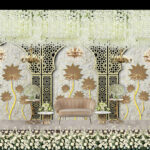
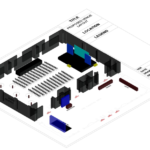
Event design creates temporary, high-impact experiences — a wedding stage, a corporate launch, a concert set, an award show. The brief changes every time. You’re designing layouts, lighting, floral and fabric styling, stage elevations and production drawings for something that exists for a single day or weekend, then gets struck and rebuilt somewhere else for the next client. The skill set leans harder into production speed, visual storytelling under a deadline, and coordinating a live build with vendors, riggers and technicians.
Neither is easier than the other. They solve different problems on different timelines — and that difference is exactly what decides how fast you can start earning in each field.
Interior Design vs Event Design Career
Day-to-Day Work: Interior Design vs Event Design
A typical week for an interior designer includes client consultations, site measurements, sourcing materials and furniture, coordinating with contractors and architects, and revising floor plans against budget and structural constraints. Projects move slowly — weeks between decisions, months between milestones — and a single home or commercial project can occupy a designer for six months to over a year before handover.
A typical week for an event designer looks completely different. You might be sketching a mandap concept on Monday, finalising a lighting plot and floral order by Wednesday, briefing vendors and confirming a production timeline by Friday, and managing the actual build and strike on-site over the weekend. Projects move fast — a wedding or corporate launch can go from first client meeting to a fully executed event in a matter of weeks. That pace is part of what makes event design appealing to people who want to see their work finished, not just planned.
Entry Qualifications: What You Actually Need to Start
Interior design typically asks for a bachelor’s degree before you’re considered job-ready — usually with coursework in design, drawing and CAD, per the Bureau of Labor Statistics. Depending on where you practise, additional registration or licensure may also apply before you can call yourself a professional interior designer.
Event design, at least the way IIED teaches it, asks for a 10+2 qualification and nothing else. There’s no licensure requirement, no mandatory multi-year degree, and no gatekeeping beyond your willingness to build a real portfolio during a 3–4 month, part-time course. That’s a genuinely lower barrier to entry for anyone who already knows they want to build and create, not spend years on a formal credential before they’re allowed to start.
Timeline to First Paid Work: Interior Design vs Event Design
This is the part most comparisons skip, and it’s the part that actually matters if you’re choosing a career today. In most markets, interior designers typically need a bachelor’s degree to enter the field — commonly a four-year program — before they’re doing real, paid client work. The U.S. Bureau of Labor Statistics’ Occupational Outlook Handbook confirms this: interior designers entering the field typically need a bachelor’s degree, with coursework in design, drawing and CAD, before they’re job-ready. That’s not a criticism of the field — it’s simply the standard, degree-track path.
Event design doesn’t run on the same clock. IIED’s Event & Wedding Design Visualization course is a 3–4 month, part-time program — design foundation, production of event design, presentation methods, and a final design project that simulates a real professional commission, finishing with a portfolio. Students walk out with a portfolio built specifically to get hired, not a general design degree they then have to translate into event-specific skills.
That gap shows up in real outcomes. Shreya Pais joined IIED with zero prior experience. By the time she finished the course, her portfolio alone was strong enough to get her hired instantly — proof that in event design, a strong, focused portfolio is what opens the door, not years of licensure or a multi-year degree.
Is Event Design a Good Career in India Right Now?
Short answer: yes, and the numbers back it up. India’s wedding industry alone is worth ₹3.75 lakh crore and growing — and trained event and wedding designers are still genuinely rare relative to that demand. Freelance work, a boutique design business, or a full-time job at an established company are all realistic outcomes once you have real design and production skill, not just an interest in events.
The strongest proof is Pranay Mhatre, who completed IIED’s Event & Wedding Design Visualization course and was hired as a Production Designer at WIZCRAFT International — India’s oldest and #1 event company. That’s not a freelance decorating gig. That’s a serious, structured role at the top of the Indian events industry, and it shows the ceiling on this career is real.
Salary proof matters just as much as placement proof. Varun Jain moved from Jodhpur’s wedding industry to Mumbai, trained at IIED, and joined The Finale Eventz as a Design Associate at ₹45,000/month on probation, rising to ₹50,000/month once confirmed. That’s an early-career number in a field most people assume doesn’t pay — because nobody’s publishing the real data. If you want a deeper look at why event design keeps getting overlooked as a serious profession, read why more people in India are choosing an event design course over the traditional routes.
Most career-comparison content online defaults to comparing event management with interior design, or skips event design as a serious discipline entirely, treating it as an offshoot of party planning. That gap is exactly why this comparison matters: event design is a distinct, trainable, and increasingly well-paid discipline in India, not a fallback option for people who couldn’t get into architecture or interior design programs.
Real Outcomes: What Happens After Event Design vs a Theory-Heavy Design Path
Here’s where the comparison gets honest. A long, theory-heavy degree — whether it’s an interior design program or an event management degree — doesn’t automatically make you hire-ready. Kshiti Jain is proof of that from the events side: she completed an event management degree and still found herself struggling to break into the wedding industry, because her education was theory-only and never gave her real design skill. It was only after IIED’s hands-on training that she built her own event design company. The parallel holds for any long, formal, classroom-first path: structured knowledge is valuable, but without production practice, it doesn’t translate into a portfolio a client or employer will hire on.
Event design flips that order. You build the portfolio first, inside the training, working on a final project that simulates an actual commission. That’s what let Shreya Pais get hired on portfolio strength alone, with zero prior experience. It’s also what let Varun Jain walk into The Finale Eventz already able to produce the technical drawings and layouts a real employer needed on day one.
Lishika Jain followed a similar path to Kshiti’s — an event management degree that taught coordination, not design — and after IIED’s hands-on training, co-founded her own event design company with two partners. Neither Kshiti nor Lishika needed another multi-year degree to close the gap. They needed a few months of focused design and production training, applied directly to real client work.
None of this means interior design is a weaker choice — it means the two careers reward different kinds of preparation. Interior design rewards structural and material depth built over years. Event design rewards a hire-ready portfolio built in months. If your goal is to start working, building, and getting paid sooner rather than later, that difference should weigh heavily in your decision.
Which Career Fits You — Event Design or Interior Design?
Ask yourself three honest questions before choosing.
Do you want to design spaces people live and work in permanently, or experiences people remember for a single day? If it’s the former — a home, an office, a hotel lobby — interior design is the better long-term fit, and the multi-year, degree-track path is worth it for that kind of work.
How soon do you need to be earning? If you’re a student weighing options mid-degree, or a recent graduate who can’t afford another multi-year commitment, event design’s 3–4 month, part-time path gets you building a real, hireable skill and portfolio far sooner.
Do you want variety, or depth in one type of space? Event design means a new brief every project — weddings, corporate launches, concerts, exhibitions. Interior design means going deep on fewer, longer-term projects. Neither is objectively better. One fits a faster, hands-on, career-first timeline. The other fits a slower, structural, long-term one.
If fees are the real hesitation — for you or for parents who need convincing — the ROI math is straightforward. IIED’s Event & Wedding Design Visualization course costs ₹60,000 total, paid across three instalments. Varun Jain’s confirmed salary of ₹50,000/month means that fee is recoverable in a little over a month of real, paid work. That’s a very different equation from a multi-year degree with tuition spread across several years before any income arrives at all.
What You Learn in IIED’s Event & Wedding Design Course
If the faster, hands-on route sounds like your answer, here’s exactly what the Event & Wedding Design Visualization course covers over 3–4 months, part-time, open to anyone with a 10+2 qualification.
Unit 1 is design foundation — elements and principles of design, colour theory, and basic typography.
Unit 2 is production of event design — trussing, lighting and sound basics, fabrics and furnishing, table styling and floral design, and vendor management and budgeting.
Unit 3 is presentation methods — sketching, graphic design for branding and layout, and production design with real construction drawings and scales.
Unit 4 is a final design project, self-directed, built to simulate a professional commission, followed by portfolio development so you leave with a professional digital portfolio, not just a certificate.
Total fees are ₹60,000 — enrolment ₹30,000, first instalment ₹20,000, second instalment ₹10,000. You can see the full curriculum, batch schedule and fee structure on the Short Term Event Design Course page. If you’re still building your portfolio strategy from scratch, this guide to launching a career as an event decorator is a useful next read.
Ready to See the Course in Person?
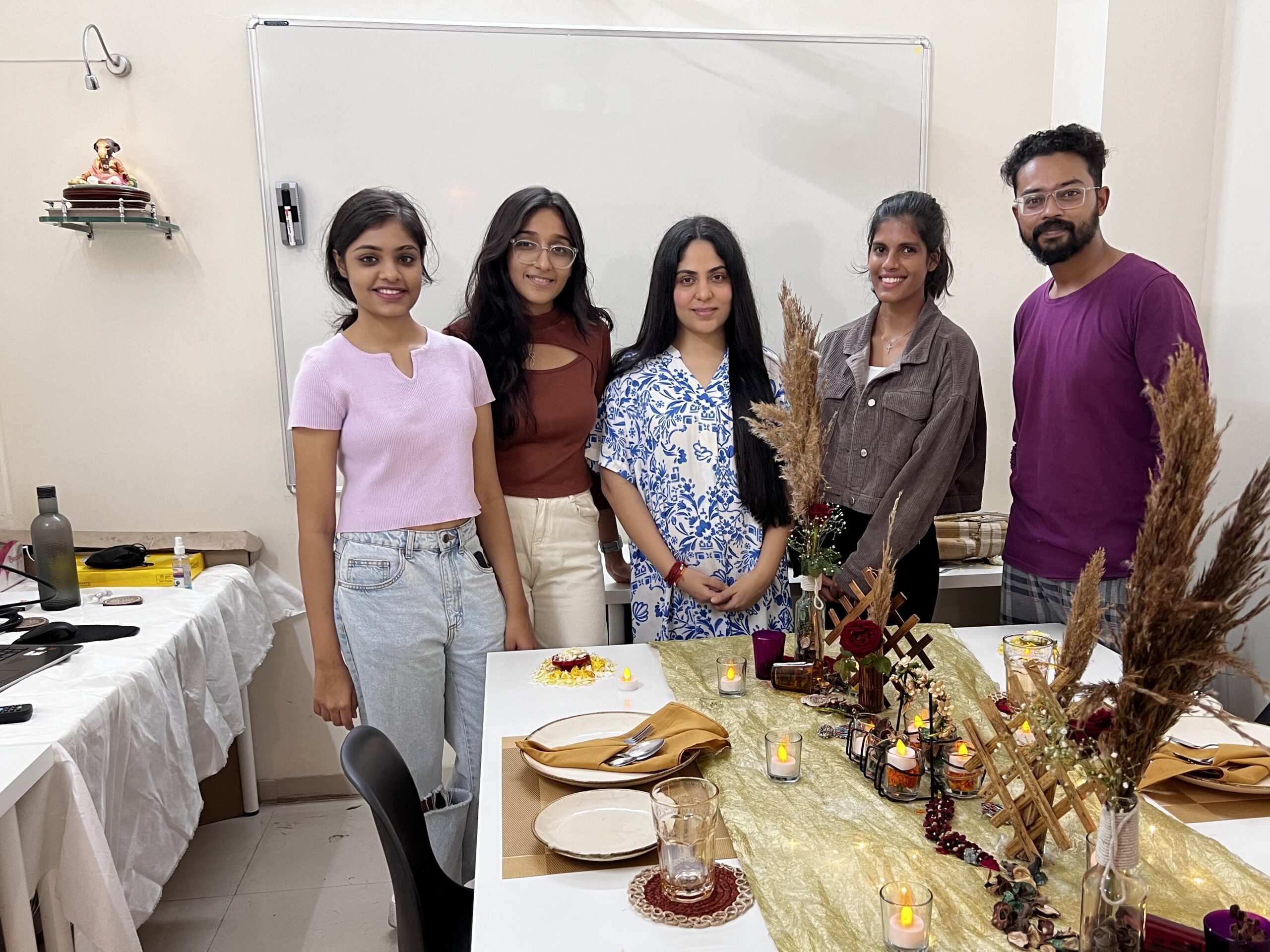
The fastest way to know if event design is the right choice for you is to see the curriculum, the portfolio work, and the training space yourself. Book your free visit to IIED in Malad East and walk through the Event & Wedding Design course curriculum in person — call or WhatsApp 9892966334.