
Event management taught you the checklist. It didn’t teach you what to do when the checklist breaks.
That’s the honest starting point for anyone asking what a production manager actually does on event day. The job description says “oversee execution.” What that means in practice is a rigging delay at 7 AM, a lighting cue that won’t fire during rehearsal, a vendor stuck in traffic an hour before doors open, and a stage that needs re-blocking with no time left to think about it. A production manager is the person who has to solve all four — often at the same time.
This guide walks through a realistic event day for a production manager in India, hour by hour, and is specific about which parts of that day need technical production skill — lighting, CAD, Vectorworks, rigging — that a standard event management degree doesn’t build. If you’re studying event coordination and wondering why the production roles on LinkedIn ask for software you’ve never touched, this is why.
Table of Contents
What Does a Production Manager Actually Do on Event Day?
A production manager runs the technical and logistical execution of an event from load-in to strike. That covers rigging and staging, lighting and sound coordination, vendor and crew management, timeline control, and troubleshooting anything that goes wrong once the event is live. Unlike an event manager, who is often focused on the client relationship, guest experience, and overall vision, a production manager is focused on whether the physical and technical elements of the event actually work — on time, safely, and to spec.
On paper, this looks like a scheduling job. In practice, it’s closer to being the person a rigging crew, a lighting operator, a sound engineer, and a client all call at the same moment when something isn’t going to plan. A production manager needs enough technical fluency to understand what each of those calls actually means — not just enough to relay the problem to someone else who does.
This is the part event management courses tend to skip. They teach budgeting, vendor coordination, and client communication — all genuinely useful — but rarely touch the technical side: how a lighting rig gets hung and focused, how a CAD drawing becomes a stage plot the crew can build from, what a cue actually is. A production manager who can’t read a rigging plan or a lighting plot is limited to relaying messages between people who can. A production manager who can read them can make the call directly, on site, in real time.
A Realistic Event-Day Timeline: Hour by Hour
There’s no single “typical” event day — a corporate conference and a wedding reception don’t run the same way. But most production days follow a similar shape. Here’s what that looks like for a mid-sized live event with rigging, staging, and lighting involved.
Load-In and Rigging (Early Morning)
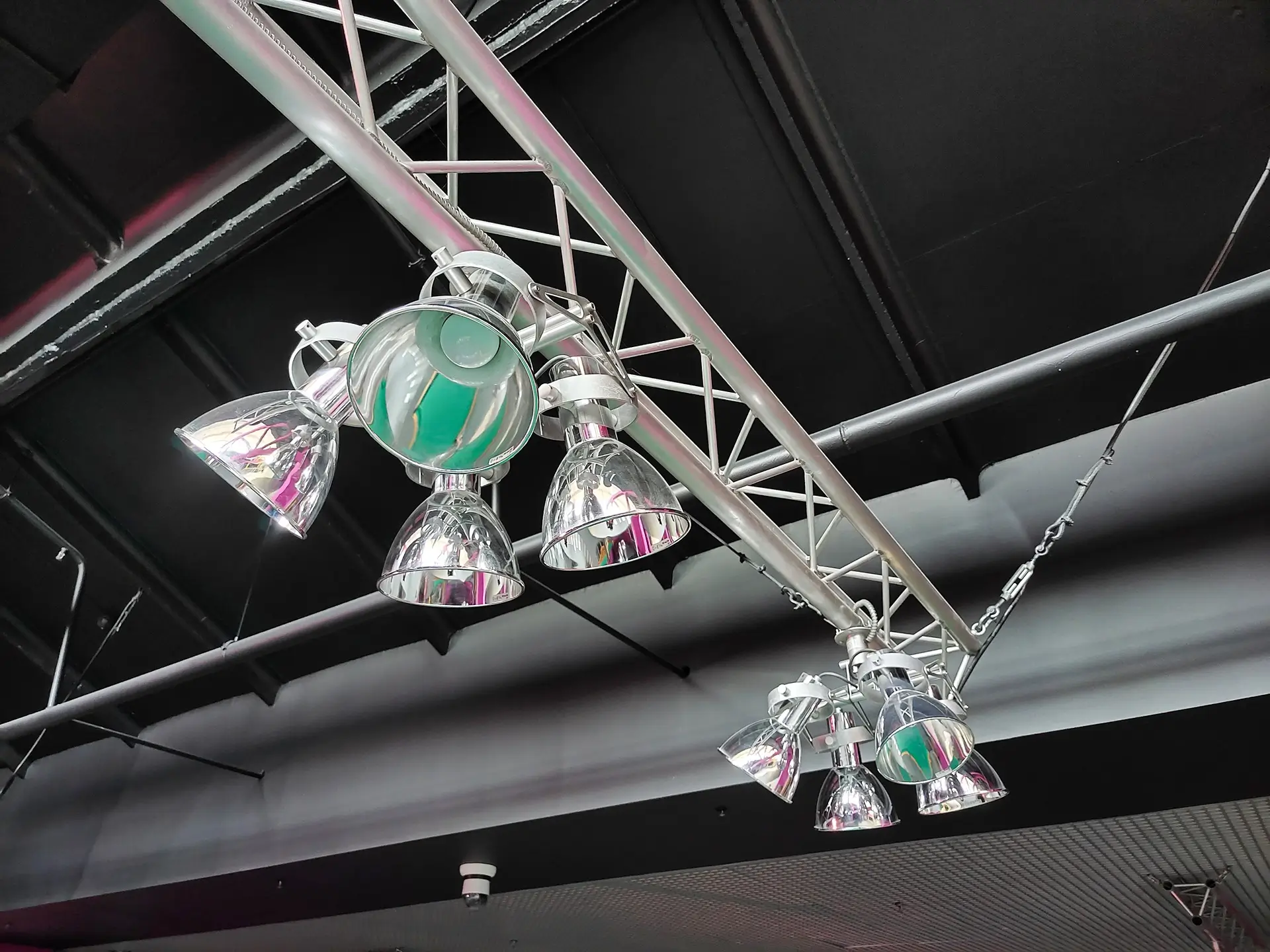
The day starts before the venue is anywhere close to event-ready. Trussing goes up first, then rigging points are checked and weight-tested, then lighting fixtures and sound equipment get hung and cabled. The production manager is on site checking the rigging plan against what’s actually happening — because what looked fine on a CAD drawing the week before doesn’t always match the venue’s real ceiling height, load points, or power access. Adjustments happen here, and they need to happen fast, because every hour lost in load-in is an hour lost from technical rehearsal.
Technical Rehearsal and Cue Building (Mid-Morning to Early Afternoon)
Once the rig is up, the focus shifts to programming: building lighting cues, checking sound levels, walking through the run-of-show with the lighting operator, sound engineer, and stage manager. This is where a production manager’s technical fluency matters most. If a cue won’t fire, or a fixture isn’t hitting its mark, someone has to diagnose it — is it a DMX addressing issue, a focus problem, a programming error? A production manager who understands lighting consoles and DMX basics can troubleshoot directly. One who doesn’t has to wait for someone else to explain the problem before a decision can even be made.
Doors Open and Live Execution (Afternoon to Night)
Once guests arrive, the production manager’s job shifts from building to holding. This is live troubleshooting — a fixture drops out mid-show, a vendor’s equipment fails, the timeline runs behind because a speaker went long. None of this is in the run-of-show document. The production manager is the person making real-time calls: cut a segment, adjust a cue, reroute power, calm a vendor down. Composure under pressure is not a soft skill here — it is the job.
Strike and Wrap (Late Night)
After the event ends, everything comes down — safely, in the right order, and usually against a venue curfew. The production manager oversees de-rigging, confirms nothing is damaged or missing, and closes out with vendors and the client. This part rarely gets mentioned in job descriptions, but a poorly managed strike can cost as much in venue penalties and damaged equipment as a poorly managed show.
Event Production Manager Responsibilities in India: What the Job Description Leaves Out
Search “event production manager responsibilities India” and most results read like generic job postings: oversee logistics, coordinate vendors, manage budgets, ensure client satisfaction. All true, and all incomplete. In the Indian live events market — weddings, corporate shows, concerts, and government or religious events — the responsibilities that actually determine whether someone gets hired and keeps getting hired are more specific:
Reading and adjusting rigging and lighting plans on site, not just approving them on paper. Coordinating directly with lighting and sound crews using shared technical language — knowing what a DMX universe is, what a truss load rating means, what “gel cut” refers to. Producing or reading CAD and Vectorworks drawings for stage layouts, seating plans, and technical plots, since most mid-to-large productions now run on digital drawings rather than hand sketches.
Managing safety compliance for rigging, power, and crowd load is also part of the role — a responsibility with real legal weight in India, where event-related accidents have pushed venues and organisers toward stricter technical standards. And managing a live budget in real time, since last-minute vendor substitutions and equipment fixes happen on almost every large show.
This is also where the Indian market is growing fastest. India’s live events segment grew 44% in 2025 to become the fastest-growing part of the country’s media and entertainment industry, according to a FICCI-EY report, driven by ticketed events, large weddings, and government-led events. More shows means more production roles — but the roles opening up are technical ones, not purely coordination-based ones.
Consider what that growth looks like on the ground. A production house running more shows per month doesn’t need more people who can write a client proposal — it needs more people who can be trusted on site with a rigging plan, a lighting console, or a CAD drawing under time pressure. That’s a direct opening for anyone willing to add technical training on top of coordination knowledge, and it’s part of why production-side hiring in Mumbai’s events industry has stayed active even as some purely coordination-focused roles have gotten more competitive.
The Technical Skills Event Management Courses Don’t Teach
Most event management programs in India are built around planning, vendor relationships, and client-facing skills. That’s real, useful training — but it stops short of the technical layer a production manager actually works in day to day. Three gaps show up most often:
Lighting and rigging fundamentals. Understanding how lighting fixtures are hung, focused, and controlled — and the safety standards around rigging weight and load — isn’t covered in a standard event management syllabus. It’s covered in dedicated lighting design and technical production training.
CAD and Vectorworks. Production documentation — stage layouts, seating charts, technical plots, rigging drawings — now runs almost entirely through AutoCAD and Vectorworks Spotlight in professional Indian production houses. A production manager who can produce or read these drawings works faster and gets trusted with bigger shows sooner. One who can’t is dependent on someone else’s drawing every time a layout needs a change on site. IIED’s CAD for Events & Entertainment course teaches exactly this — the same drawings Aron Sagar and Varun Jain used to land their production placements, covered below.
Cue-based programming logic. Lighting cues, timecode, and console programming (GrandMA3, Avolite Titan) aren’t intuitive without training. A production manager doesn’t need to be a full-time programmer, but understanding how a cue stack works is the difference between diagnosing a live problem in seconds and standing there waiting for someone else to explain it.
None of these gaps are permanent. They’re the reason focused, hands-on technical courses exist alongside broader event management degrees — not to replace the planning and client-facing skills, but to add the technical layer that production roles actually demand.
Who Should Become a Production Manager?
This career fits two kinds of people especially well.
The first is the event management graduate who already knows how to plan an event but keeps hitting a wall in interviews for production-side roles — asked about rigging, CAD, or lighting consoles and realising the degree never covered any of it. This is a common, specific frustration. It’s also completely fixable with focused technical training rather than a second full degree.
The second is anyone exploring live events who hasn’t yet realised how many roles exist beyond “event planner.” Production management sits at the intersection of technical skill and organisational control — a strong fit for people who like solving problems on their feet, working with real equipment, and seeing a show actually come together, not just planning it on paper.
There’s also a third group worth naming: people already working in events — a coordinator, a vendor liaison, a freelance planner — who want to move up without stepping away from income for a full year. Because production skills are learnable in focused, short blocks (a one-month CAD course, for instance, rather than a multi-year degree), moving from coordination into production is realistic even for someone currently working full-time.
Where a candidate learns these skills matters too. Mumbai has several event management institutes, but very few combine event design, lighting, and production training under one roof with access to real professional equipment — GrandMA3 consoles, industry-standard CAD and Vectorworks labs, live show experience. A production manager candidate trained on real gear, in small batches with working industry mentors, walks into an interview able to talk specifics — not just describe what a rigging plan is, but explain how they built one.
How to Become Job-Ready — Real Placements, Not Promises
The fastest path from “I understand events” to “I can run production on event day” is technical, hands-on training — not another semester of theory.
Pranay Mhatre completed IIED’s Event & Wedding Design Visualization course and was placed as a Production Designer at WIZCRAFT International Entertainment — India’s oldest and largest event company. That’s proof a production-side role at the top of the Indian events industry is a realistic outcome, not an exception.
Aron Sagar took IIED’s one-month CAD for Events & Entertainment course and was placed in the Operations & Production department at NMACC (Nita Mukesh Ambani Cultural Centre) in BKC, Mumbai — one of India’s most prominent event venues. A focused, one-month technical course led directly to a production department placement at a major venue.
Varun Jain completed the same course and joined The Finale Eventz as a Design Associate, starting at ₹45,000 a month and confirmed at ₹50,000 after probation — real proof that production and design-adjacent technical roles pay well.
And Kshiti Jain, an event management graduate, put it plainly: after finishing her event management studies, she found herself struggling to break into the wedding industry. Technical, design-focused training gave her the foundation to start her own company. Event management alone got her in the room. It didn’t get her the production and design skills the room actually needed.
These aren’t outliers. They’re what happens when coordination knowledge gets paired with real technical training — CAD, Vectorworks, lighting, rigging — on professional equipment, taught by people who run live shows for a living.
If you’re studying event management and keep hitting the same wall Aron, Varun, and Kshiti hit — or if you’re still figuring out where you fit in live events — the fastest way to find out is to see the training in person. Book your free visit to IIED in Malad East, Mumbai, and walk through exactly what the CAD, lighting, and production courses cover before you commit to anything.