
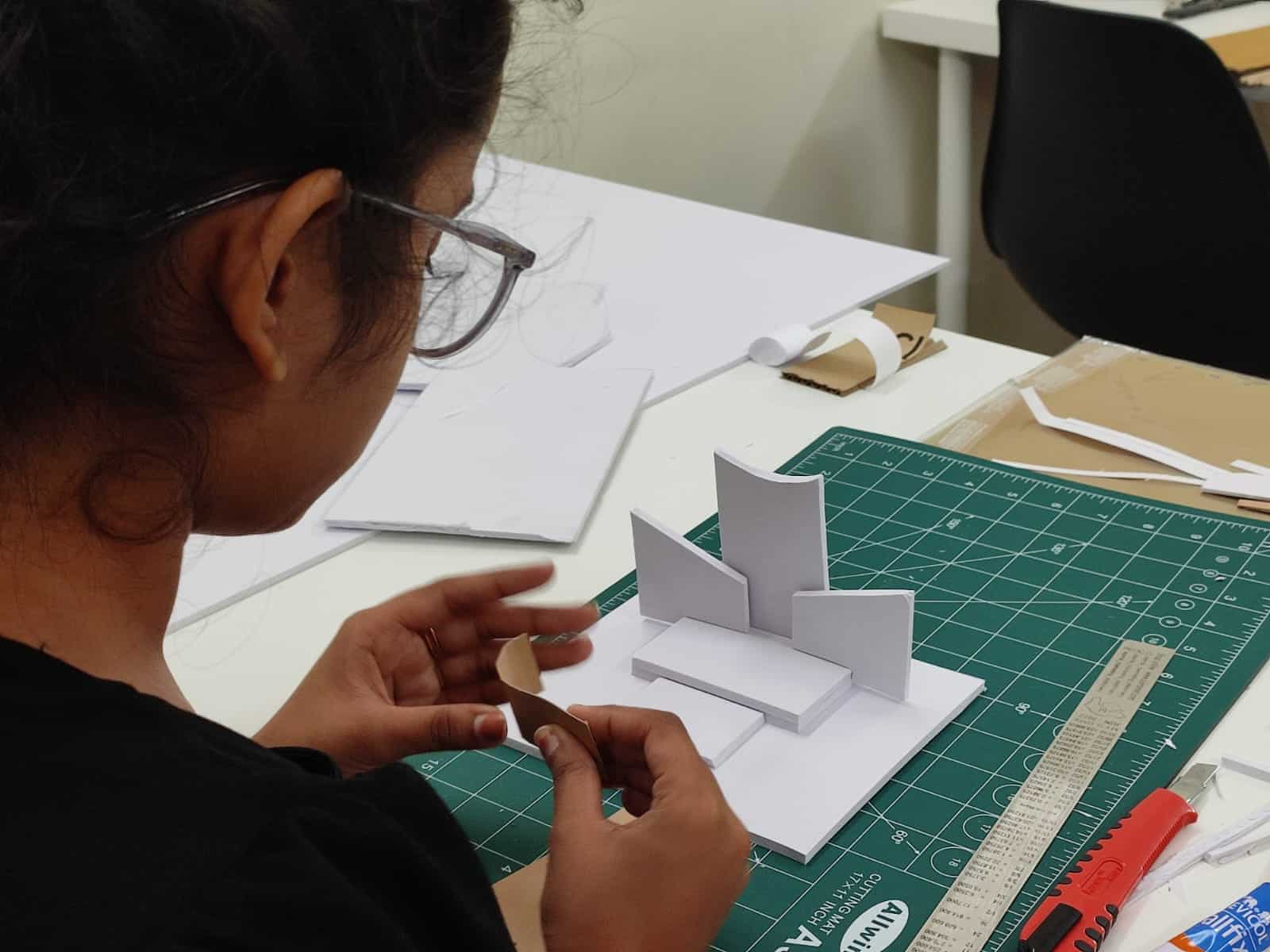
If you’re Googling how to switch to event design without quitting your job, you’ve probably already ruled out the option everyone assumes is the only one: resign, lose the paycheck, start over from zero. That’s the story career changes get told as. It’s rarely true. At IIED, students who work full-time in hospitality, interior design, architecture, or marketing switch to event design while their salary keeps coming in — not despite their job, but around it. Here’s what that actually looks like, with real students, real schedules, and no invented numbers.
Table of Contents
Why “Switching Careers” Sounds Riskier Than It Is
Most people considering event design frame it as a leap. Quit the stable job, enrol full-time, hope it works out. That fear is reasonable — nobody wants to trade a working salary for an unproven one. But it rests on a false assumption: that event design training only comes in the full-time, daytime format most institutes still teach in.
IIED’s Event & Wedding Design Visualization course runs part-time over 3–4 months, in the evening. It was built for people who already have a job, a business, or a family relying on their income — not for school leavers with nothing else on their plate. You don’t quit anything to start it.
This hesitation isn’t unique to event design. Broader research on the job market — including the World Economic Forum’s Future of Jobs Report — points to a large and growing share of workers needing to update their core skills within just a few years, which is pushing more people toward exactly this kind of side-of-desk reskilling rather than a full restart. Event design is simply one of the more visible examples of it.
It’s also worth naming plainly: most event management diplomas advertised in India are built as full-time, daytime programs aimed at students, not working adults. That’s not a criticism of those programs — they’re designed for a different student. But if you’ve searched for an event design course for working professionals in India and mostly found daytime diplomas that assume you have nothing else going on, that’s why. The gap isn’t in your ambition. It’s in how most courses are scheduled.
Who This Path Is Actually For
This route is built for one specific kind of person: someone currently employed, often in hospitality, interior design, architecture, or marketing, who is bored, underpaid, or sitting on a creative instinct they shelved years ago. If that’s you, the biggest obstacle usually isn’t skill. It’s the fear of starting completely over, and the fear that a course schedule will collide with work hours you can’t afford to lose.
Picture the specific version of this. You’ve spent three or four years in a hospitality role, coordinating logistics for events you didn’t get to design. Or you’re in interior design, comfortable with space and materials but never trained on the production side — trussing, lighting, floor plans built for live events rather than static rooms. Or you’re in marketing, good at planning and vendor coordination, but the creative decisions always sit with someone else. In each case, you already have relevant instinct and experience. What’s missing is the specific technical and design vocabulary that turns “I have a good eye for this” into a hireable, portfolio-backed skillset.
It’s also relevant if you’re still in college and want to test event design part-time before committing to it as a full career, rather than graduating into an unrelated job and trying to switch later.
Either way, the question is the same: can this fit around the life you already have? For IIED’s part-time course, the honest answer is yes — and the rest of this post is about exactly how, including what the schedule actually demands and what you don’t get if you go this route instead of full-time training.
How IIED’s Part-Time Evening Course Is Built Around a Job
IIED’s Course 1A — officially the Event & Wedding Design Visualization course — is a part-time event design course in Mumbai, run out of the institute’s Malad East campus. It runs 3–4 months, with evening sessions built for people who work through the day. You attend after work, not instead of it.
This is a genuine structural difference, not a marketing line. Most event management diplomas in India — including the ones larger institutes advertise heavily — are built as full-time, daytime programs aimed at students with no job to work around. IIED’s evening format exists specifically for the person who already has income and doesn’t want to lose it just to retrain. If you can’t attend in person — you’re outside Mumbai, or your evenings genuinely aren’t free — Course 1B delivers the same curriculum online, which is how students in cities like Jaipur and towns across Tamil Nadu have gone through it without relocating.
Batches stay small by design, and every mentor teaching the course is a working industry professional, not an academic teaching from a textbook. That matters more in a part-time format than a full-time one. With fewer contact hours each week, every session needs to be taught by someone who has actually done the work, not someone explaining it secondhand.
What the Course Actually Covers
The course moves through four units: design foundation (elements and principles of design, colour theory, basic typography), production of event design (trussing, lighting and sound basics, fabrics and furnishings, table styling, floral design, vendor management and budgeting), presentation methods (sketching, graphic design, production design drawings), and a final design project that simulates a real professional commission. You leave with a digital portfolio, not just a certificate.
There’s also a masterclass component taught by industry experts, and practicals in floral design and sketching. None of this is theory-only — it’s built to produce work you can actually show a client or employer. By the end, most students can point to a specific finished project, not just a transcript of topics covered.
What It Costs While You’re Still Earning
Course 1A costs ₹60,000 total, split into three payments: ₹30,000 at enrolment, ₹20,000 as the first instalment, and ₹10,000 as the second. That structure matters more than it looks. Instalments spread across the course mean you’re paying out of a salary you’re still earning, not a lump sum you’d need savings or a loan to cover before quitting anything.
This is different from what a full-time career restart usually costs. Quit a job to retrain full-time and you’re paying course fees on top of months of lost income — often the real reason people talk themselves out of switching careers at all. Keep the job, and the maths changes completely: the course becomes an expense against an ongoing salary, not a bet against your savings.
Real Students Who Switched Without Quitting
None of this matters without proof it actually works. Three IIED students switched to event design — or deepened their existing work in it — without quitting their jobs. Here’s what that looked like for each of them.
Nirali Reshamiya — Wedding Visualization Designer, Gurleen M Puri
Nirali was working with a wedding decorator in Gujarat when she enrolled in IIED’s evening course. She kept her job the entire time. “Because it’s a part-time evening program requiring only two hours a day, I was able to upskill without leaving my job,” she says. “This training was a complete game-changer — I moved instantly into a much higher position at Gurleen M Puri.” She didn’t take a career break to get there. She trained around the job she already had, then used what she’d learned to move up in it, rather than starting over somewhere new.
Rishabh Rao — Family AVL Business, Mumbai
Rishabh wasn’t switching out of a job — he was already working in his family’s AVL (audio-visual-lighting) rental business, one of the larger ones in Mumbai. He didn’t join IIED to leave the business. He joined to build a professional design foundation underneath work he was already doing. The course didn’t replace his job. It gave the work he was already doing a technical backbone it didn’t have before — the difference between running equipment and understanding the design principles behind why it’s placed where it is.
Shreeharsh — From Renting Lights to Designing Experiences, Pune
Shreeharsh owned a lighting rental company in Pune before he enrolled, and kept running it the entire time he studied, commuting to Mumbai for every lecture. “I committed to traveling from Pune for every lecture because I wanted to learn the ‘why’ behind the light,” he says. “Today, I don’t just rent out lights — I design and execute high-end experiences that have elevated my company’s reputation.” His business didn’t pause while he trained. It changed shape — from a rental operation to one that designs, not just supplies.
What connects all three stories isn’t luck or timing. It’s that none of them treated the course as a reason to stop working. They treated it as something to add to work they were already doing, which is the entire premise this format is built on.
What You Learn — And When You Can Start Using It
Portfolio work isn’t saved for after the course ends. It happens inside it. Unit 4 is a self-directed Final Design Project that simulates a real professional commission, and Portfolio Development runs alongside it, building the digital portfolio you’ll actually use to apply for design roles or pitch clients. Some students, like Nirali, start applying what they’ve learned to their existing job before the course is even finished.
That timing is the entire point of a part-time format. You’re not waiting three or four months in isolation for a certificate to mean something. You’re building proof of skill while you still have the job that pays your bills. By the time the course ends, you have a portfolio and a decision to make — not a leap of faith to take.
It’s worth being honest about the tradeoff, too. A part-time evening schedule over 3–4 months asks less of your calendar each week than a full-time program would, which also means it asks for consistency over a longer stretch rather than total immersion for a short one. For someone balancing a job, that trade is usually the right one. For someone with genuinely no other commitments, a full-time path might move faster — but that’s not the position most people reading this are in.
Does It Actually Pay Off?
Two questions usually follow “can I do this part-time”: what does it cost, and does it lead anywhere real. For the cost side, we’ve broken down IIED’s full fee structure separately — see our guide to event design course fees in India for exact numbers across every course.
On the outcome side, Varun Jain moved into a Design Associate role at The Finale Eventz on a ₹45,000/month probation salary, confirmed at ₹50,000/month. Manisha Mahto moved from Ranchi to Mumbai and into a Junior Graphic Designer role at Inextis Events at ₹30,000/month. These are verified numbers from actual offer letters, not projections or averages.
For a fuller picture of what event designers earn across experience levels and companies, see our full breakdown: Event Designer Salary in India — Real 2026 Data.
The long-term trajectory matters too. Some students who start this way don’t stop at a design associate role. Kshiti Jain and Lishika Jain, both event management graduates who trained at IIED, went on to start their own event design companies rather than staying employees indefinitely. The point isn’t that everyone ends up running a business — it’s that the part-time route doesn’t cap where you can go. It just changes how you get started, and lets you find out if the work suits you before you’ve given up anything to test it.
Switch Without the Leap
Switching to event design doesn’t require betting your income on an unproven idea. It requires a couple of evening hours a few days a week, for three to four months, while your salary keeps arriving as usual. Nirali, Rishabh, and Shreeharsh didn’t quit anything to get here. They added a skillset to what they already had.
See full details of the Event & Wedding Design Visualization course, or come find out whether the schedule fits your job specifically. Book your free visit at IIED’s Malad East campus — bring your spouse or family along if you’d like a second opinion in the room.
There’s no obligation attached to the visit itself. It’s a walkthrough of the campus, a straight conversation with Raj about your current job and where event design could actually fit around it, and a chance to see the equipment and past student portfolios before you commit to anything. Most people who are still deciding find that seeing the format in person answers more questions than another hour of searching online ever could.