
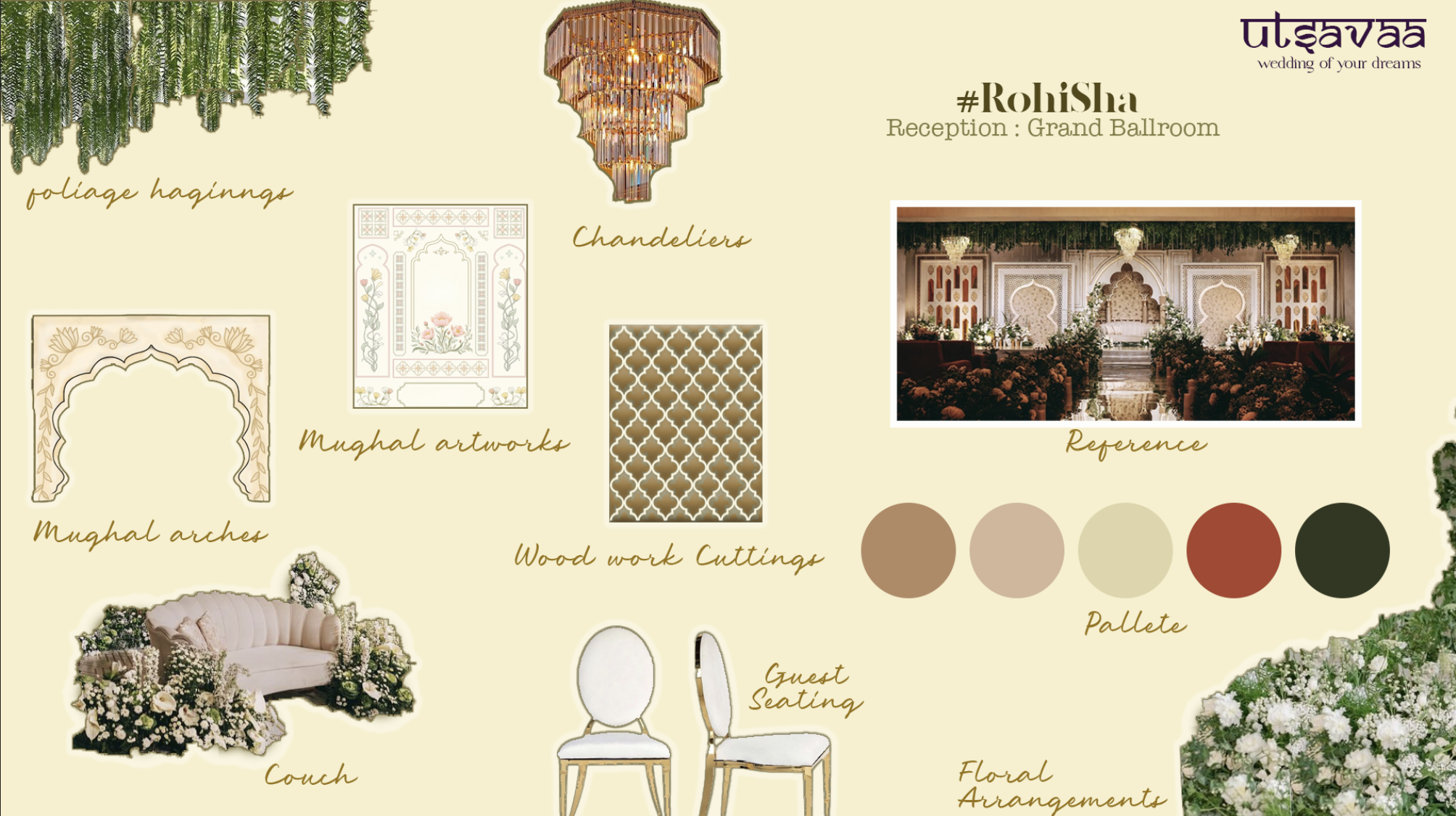
If you’ve ever spent hours getting a mandap layout right, sketched a wedding stage on the back of a notebook, or stood back at a family wedding thinking “I could have built this better” — you’ve already done part of the job. Mandap and stage design is a genuine, specialised career in India, and it’s separate from general wedding planning or “decoration.” Most people who are naturally good at it never realise it can be trained, hired for, and paid for. They call it a hobby. A favour they do for cousins. Something they “help with.”
It isn’t. It’s scenic design. And it has a name, a skill set, and real career outcomes attached to it.
This article breaks down what mandap and stage design actually involves, how it’s different from decoration and from wedding planning, what a proper wedding stage designer course in India should teach you, and what real IIED-trained designers are doing with this skill right now — including the salaries and companies attached to their names.
Table of Contents
What Mandap and Stage Design Actually Means
A mandap is not just a decorated structure. It’s a piece of scenic architecture — built, lit, and styled to hold an entire ceremony’s visual weight for hours, on camera, in front of hundreds of guests. The same is true of a wedding stage, a sangeet backdrop, or a reception centrepiece. Someone has to design that structure before a single flower is placed on it: the proportions, the sightlines from every guest table, the load-bearing frame under the fabric, how the lighting will hit it after sunset, how it photographs from the drone shot the family will play at every anniversary for the next thirty years.
That’s mandap and stage design as a career in India — a discipline that sits at the intersection of set design, structural planning, and event styling. It’s the same skill family used to build stages for concerts and award shows, just applied to the biggest personal event most Indian families will ever host. A trained mandap and stage designer thinks in floor plans, load calculations, materials, and lighting plots, not just fabric and flowers.
The confusion happens because most people only ever see the finished result — the flowers, the drapes, the final photograph. They never see the design process behind it: the sketch, the scaled drawing, the material list, the on-site build supervision. That invisible process is the actual job, and it’s a trainable, technical skill, not raw “taste.”
Scenic Design for Weddings vs. General Wedding Decoration
Here’s the distinction that matters most if you’re considering this as a career: decoration is the styling layer. Scenic design for weddings is the structural and spatial layer underneath it. A decorator arranges flowers, drapes, and props within a space that already exists. A mandap and stage designer creates that space — the structure, the scale, the layout, the way it will be lit and photographed — before decoration even starts.
Most family-run decoration businesses in India are strong at the styling layer and weak at the design layer, because nobody ever trained them in it. They learned by doing, by trial and error, by copying what worked at the last wedding. That’s a real skill, but it has a ceiling. Without design training, a decorator can style what already exists. A trained designer can create something that’s never been built before — and charge accordingly.
This is also where mandap and stage design pulls ahead of general event planning as a career path. Event and wedding planning is coordination: vendors, timelines, budgets, logistics. It’s essential, but it isn’t design. A planner makes sure the mandap arrives on time. A designer decides what the mandap looks like, how it’s built, and how it photographs. Families increasingly want both — but they pay more, and more consistently, for the person who can actually design the space, not just manage it.
What a Wedding Stage Designer Course in India Should Teach You
A real wedding stage designer course in India needs to cover four things, in order. First, design foundation: elements and principles of design, colour theory, proportion, and scale — the same fundamentals that apply to any spatial design discipline. Second, production skills: trussing and structural basics, lighting and sound fundamentals, fabric and furnishing knowledge, floral design, and vendor and budget management, because a mandap designer who doesn’t understand load-bearing structures or basic rigging is designing on paper only.
Third, presentation methods: sketching, construction drawings at scale, and enough graphic design skill to put together a client-ready concept deck. This is the part most family businesses and self-taught decorators skip entirely — and it’s exactly the part that separates a hobbyist from someone who can walk into a client meeting, present three scaled mandap concepts, and get signed off on the spot. Fourth, a final design project that simulates a real professional commission, built into a portfolio a designer can actually show prospective employers or clients.
IIED’s Event & Wedding Design Visualization course is built around exactly this structure — Design Foundation, Production of Event Design, Presentation Methods, and a Final Design Project, with portfolio development running through the whole thing. It’s a 3–4 month, part-time offline course (also available online), open to anyone with a 10+2 education. There’s no requirement to already have a design degree or a family decoration business — both the complete beginner and the person already running a small decor setup benefit from the same structured training, because both groups are usually missing the same thing: the technical design layer underneath the styling.
Practicals matter more than lecture hours here. Floral design and sketching practicals, masterclasses from working industry experts, and — critically — a final project and digital portfolio assessment instead of a written exam. A course that only tests theory doesn’t prepare you to walk onto a real site and problem-solve a mandap build under time pressure. A course built around practicals and a portfolio does.
Real Careers: How Mandap Designers in India Are Getting Hired
This isn’t a theoretical career path. Real IIED-trained designers are working in it right now, and their outcomes are verified, not projected.
Sabari Kishor took the Event & Wedding Design Visualization course online while helping run his family’s decoration business in Tamil Nadu. Learning professional visualisation skills let him modernise how the business presented concepts to clients — turning a small-town family decoration setup into one that pitches with the same design language as a big-city studio. If your family already runs a decoration or mandap business, this is the direct path: the business relationships already exist, and design training is what upgrades the offering.
Nirali Reshamiya trained part-time — just two hours a day, in the evenings — while continuing to work at a wedding decoration company in Gujarat. She didn’t quit her job to build this skill. She moved into a higher role as Wedding Visualization Designer at Gurleen M Puri almost immediately after finishing, because the design skill was the missing piece, not ambition or experience.
Kshiti Jain came from the other direction — an event management graduate who found she couldn’t break into wedding design at all, despite having a degree in events. Event management training teaches coordination and logistics, not design. IIED’s training gave her the technical foundation to found her own event design company, rather than staying limited to a planning role.
Varun Jain moved from Jodhpur’s wedding industry to Mumbai specifically to train offline and master the technical side of design. He’s now a Design Associate at The Finale Eventz, earning ₹45,000 a month on probation, rising to ₹50,000 a month confirmed — real salary data from a verified offer letter, not an estimate.
And Pranay Mhatre, IIED’s flagship Event & Wedding Design placement, is now a Production Designer at WIZCRAFT International — India’s oldest and largest event company. That’s the ceiling this skill set can reach: designing structures and stages for the biggest names in Indian live events, not just family weddings.
The pattern across all five stories is the same. None of them lacked eye, taste, or work ethic. What separated “helps out with decor” from “gets paid as a designer” was structured, technical training in the design layer — exactly what a proper mandap and stage design course provides.
Who This Career Is For
Mandap and stage design suits two kinds of people especially well. The first is the directionless graduate — someone in their early twenties who has a strong creative eye, maybe helped style a cousin’s wedding or a college event, but has no structured pathway and no proof to themselves or their parents that this can be a real, paying profession. This career gives that proof: real companies, real salaries, real portfolios.
The second is the homemaker restarting her career after a break for marriage or children. If you’ve organised family weddings, styled a mandap, or run point on décor for relatives’ events, you already have the instinct this job runs on. What’s usually missing isn’t talent — it’s the technical vocabulary, the scaled drawings, the structural know-how, and the confidence that comes from formal training. A flexible, part-time or online course removes exactly that barrier, without asking you to start over from zero.
Family decoration businesses looking to professionalise, and event management graduates who’ve realised coordination isn’t the same as design, both fit here too. In every case, the missing ingredient is the same: structured design training layered onto instincts and experience that already exist.
It also suits working professionals in hospitality, interior design, or architecture who already understand space and materials but have never applied that knowledge to weddings specifically. The technical overlap is real — reading a floor plan, understanding scale, working with a build crew — which means the learning curve for this group is often shorter than they expect. What’s usually missing for them is not raw skill but exposure to how mandap and stage builds actually work on an Indian wedding site: the timelines, the vendor relationships, the specific materials and rigging methods that differ from a corporate interior fit-out or an architectural project.
Why This Career Is Wide Open Right Now
Search around for “mandap design career” or “wedding stage designer training” in India and you’ll mostly find two kinds of pages: vendor listings selling decoration services, and generic wedding-planning content that treats design as a footnote inside broader event coordination. What you won’t find, even from the major Mumbai institutes that teach event and wedding courses, is anyone treating mandap and stage design as its own trainable, career-worthy specialisation with a defined curriculum and verified outcomes attached to real names.
That’s not a small gap. It means the people already good at this — family decorators, homemakers with an eye for it, event management graduates stuck in coordination roles — have had nowhere structured to go to turn instinct into a credentialed, hireable skill. A course that treats scenic design for weddings as seriously as it deserves, backed by real placement data rather than vague promises, fills a genuine hole in what’s currently on offer.
Where This Career Actually Leads
India’s wedding industry is the country’s fourth-largest, generating an estimated $130 billion a year, according to the India Brand Equity Foundation (IBEF) — and decoration alone accounts for roughly 14% of total wedding spend, right alongside catering and venue as one of the biggest line items in every Indian wedding budget. That’s not a shrinking market for someone with real design skill to enter. It’s one of the largest, most consistently growing creative economies in the country, and it still runs mostly on untrained, self-taught decorators.
That gap is the opportunity. Learn the structural and design side properly, and you’re not competing with every decorator in your city anymore — you’re offering something most of them can’t: a designed, engineered, presentation-ready mandap or stage, backed by a real portfolio and real training.
Read more on the broader role a trained wedding designer plays in modern Indian weddings, browse real stage decoration ideas for weddings for visual inspiration, or if you’re in the city, see the complete path in how to become a wedding designer in Mumbai.
External source: India Brand Equity Foundation — Examining the Economic Impact of India’s Wedding Industry.
Ready to find out if this is the career you’ve been doing for free? Book your free visit at IIED, Malad East, Mumbai, and bring your questions.